
Last updated November 23, 2026
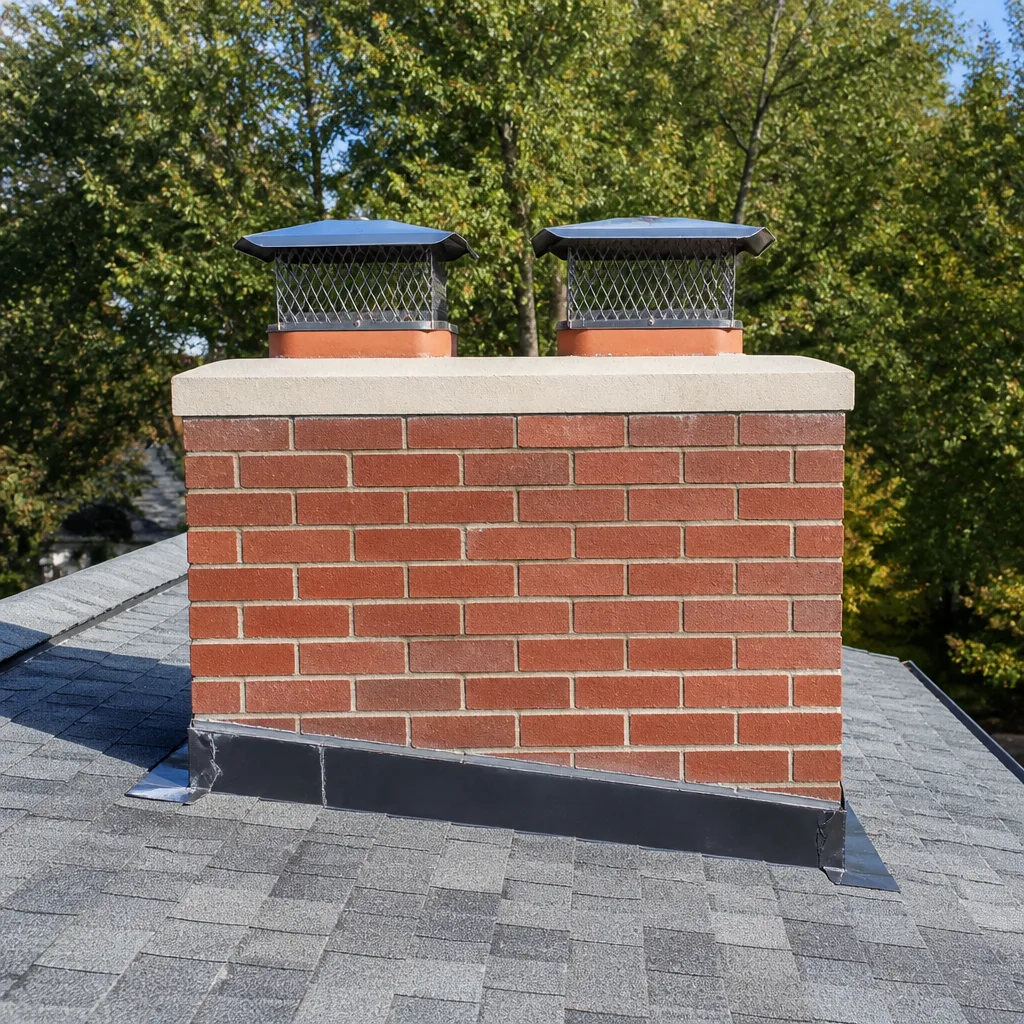 Sweep & inspection
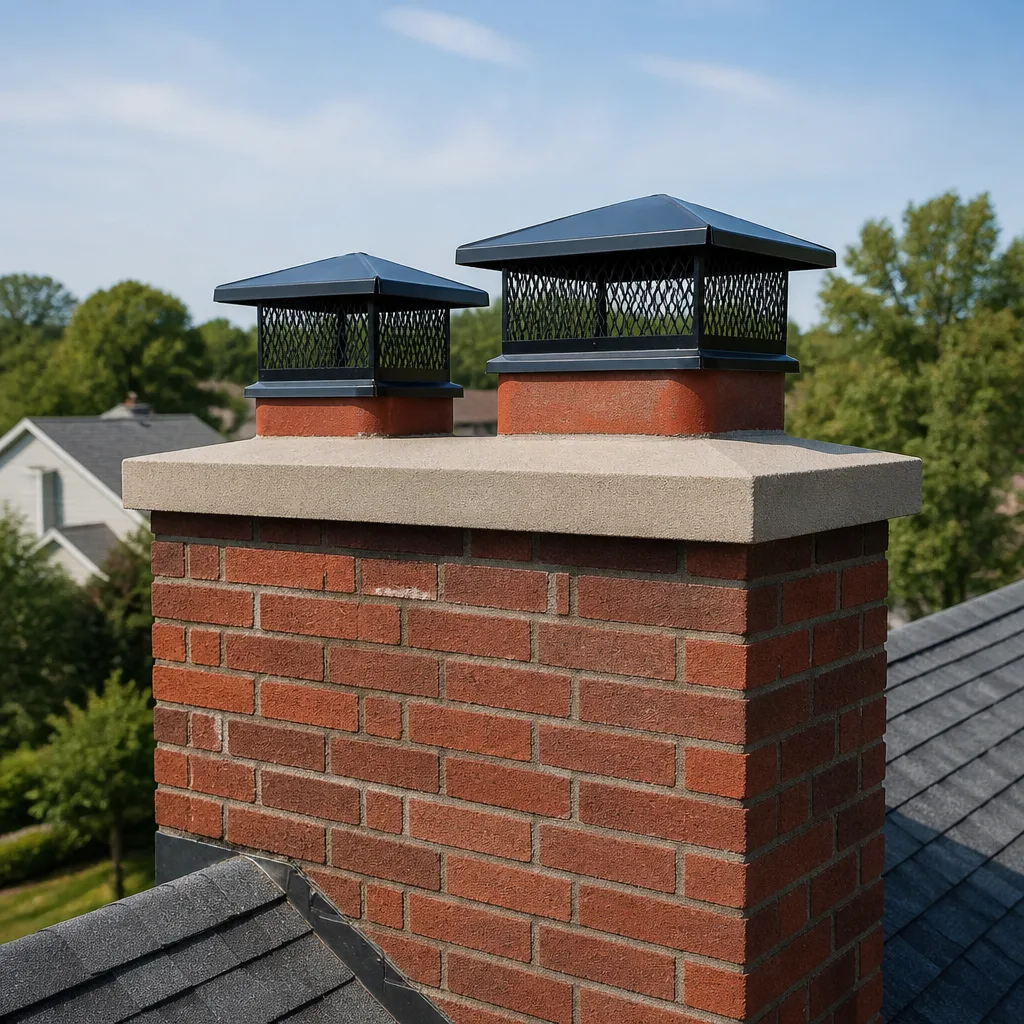 Caps & crowns
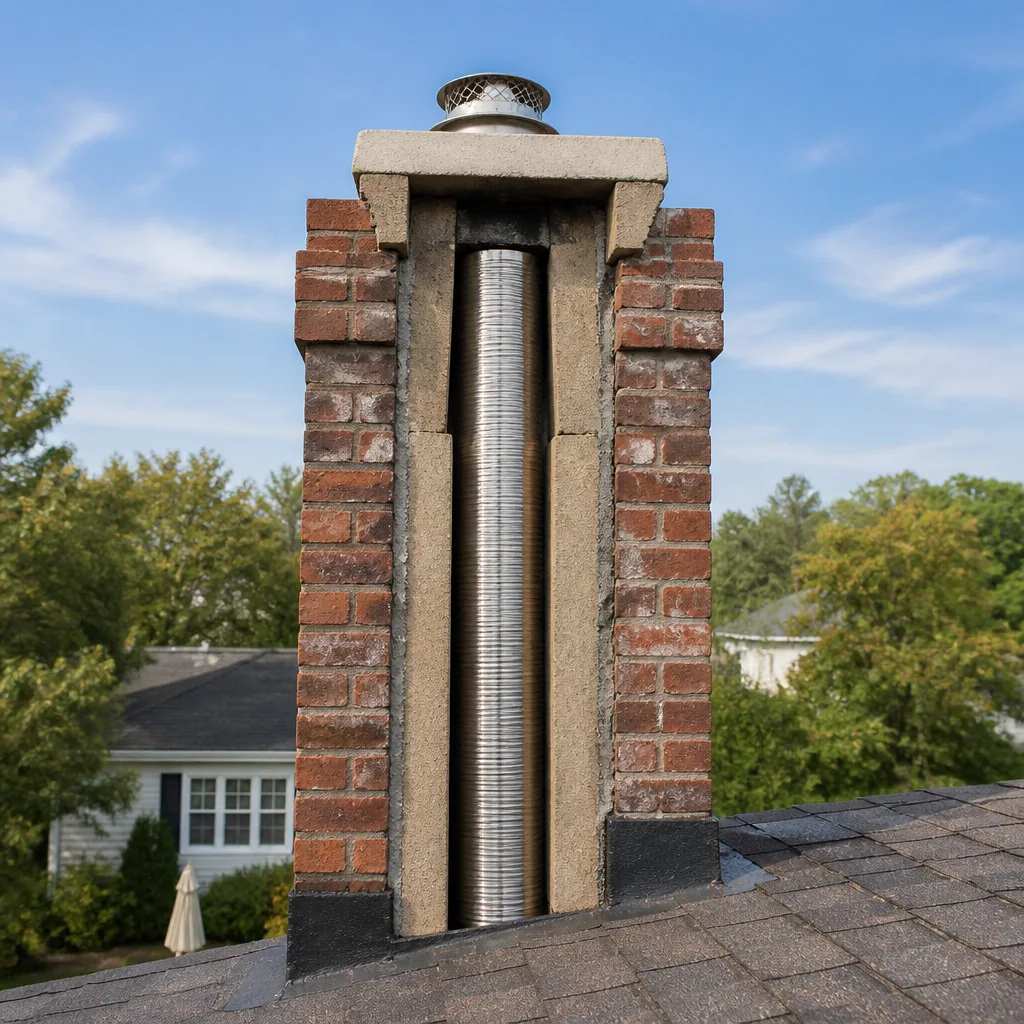 Flue relining
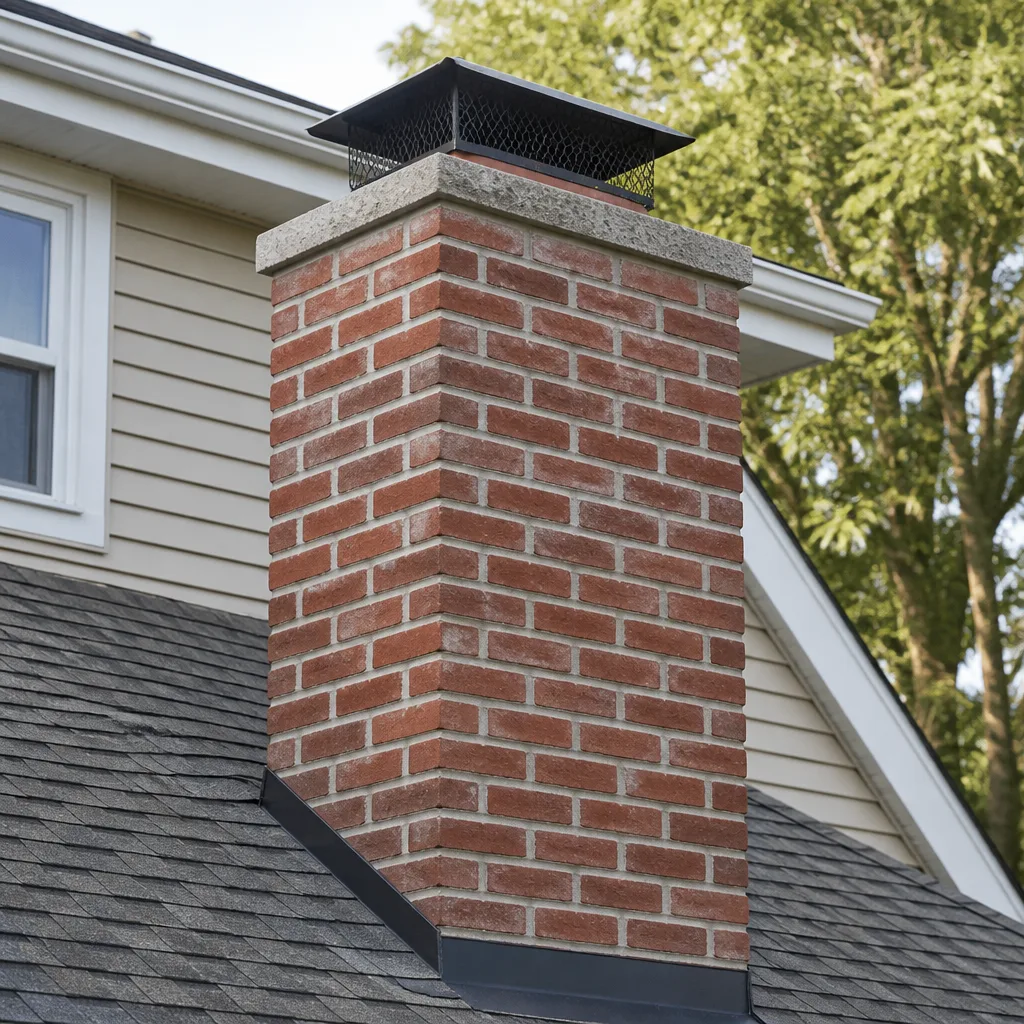 Masonry repair
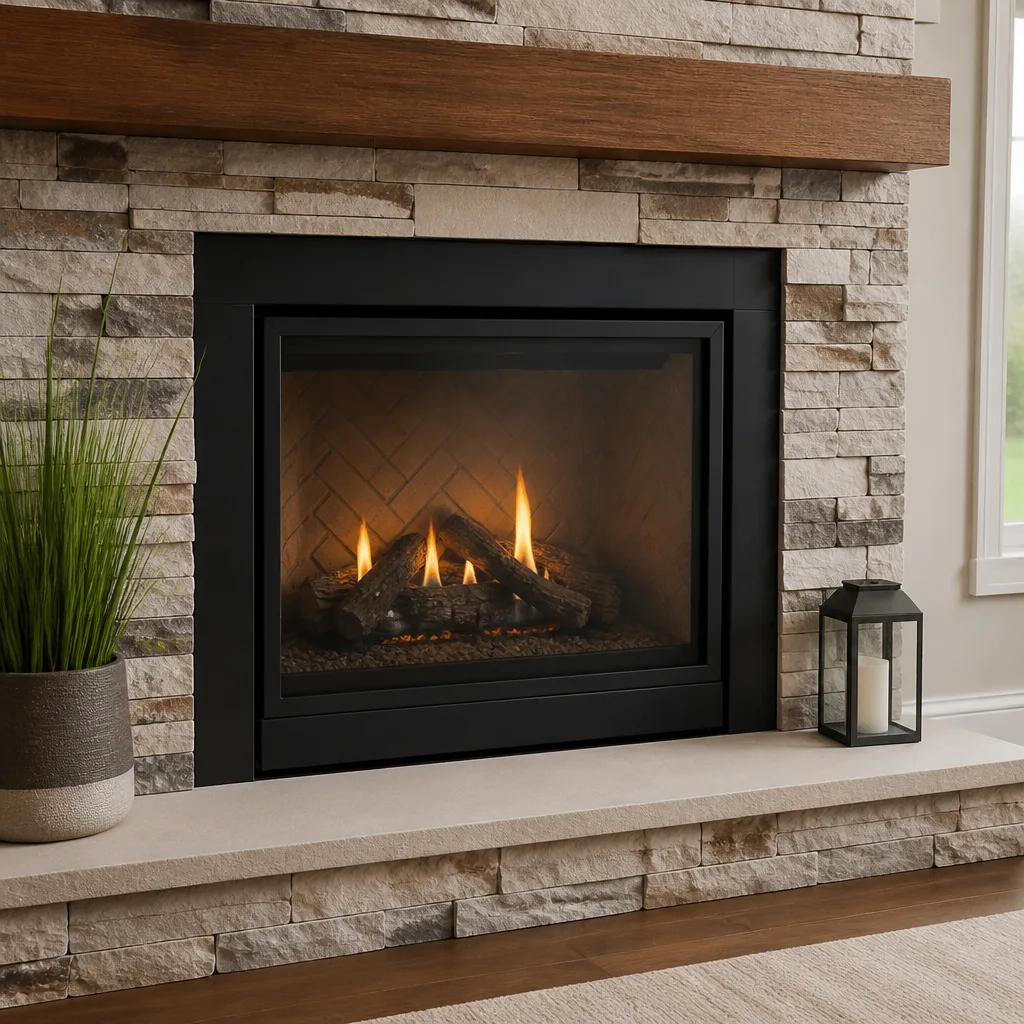 Gas fireplace service
Level 1 sweep and inspection to the NFPA 211 annual standard - flue, crown, cap, and flashing checked and photographed
Chimney sweep logs do not sweep chimneys. They loosen some creosote - which then falls where a brush and vacuum still have to collect it.
Chimney Cleaning Warning Signs: A Northeast Raleigh Homeowner’s Reference Guide
Efflorescence, the chalky white staining that appears on chimney masonry, is almost never a cosmetic problem. It’s a moisture migration signal, and the water usually isn’t coming from the face of the brick. It’s moving through the structure from the inside out, which means the liner, the crown, or the flashing above it is the more likely source. Most warning sign guides stop at “white staining” and “smoky smell” and leave you there. This reference goes further. It maps specific symptoms to their underlying causes so Northeast Raleigh homeowners can tell a cleaning problem from a structural one before lighting the first fire of the season.
Quick Answer
The warning signs that mean your chimney needs professional attention fall into three groups: safety signals (smoke rolling into the room, a strong acrid smell, soot flakes falling back), moisture signals (white efflorescence, brown ceiling stains, spalling brick, rust on the damper), and structural signals (cracks through the firebrick, a crumbled crown, missing cap). Cleaning issues usually involve creosote buildup and soot. Structural issues involve water, heat damage, or failing masonry, and those get worse the longer they’re left. If you can see any structural sign from the ground, book an inspection before your next fire.
Styles & brands we work with
- Sweep & inspection
- Caps & crowns
- Flue relining
- Masonry repair
- Gas fireplace service
Table of Contents
- The Symptom-to-Cause Map: What Each Sign Usually Means
- White Staining and Efflorescence: Where the Water Is Really Coming From
- Brown Ceiling Stains Near the Chase: Flashing Failure or Crown Failure?
- Smell Signatures: Musty, Acrid, and Sulfur-Adjacent Odors
- Smoke Rollout: Draft Failure, Blockage, or Negative Pressure
- Reading Firebox Cracks: Mortar Joints vs. Firebrick
- What You Can Assess From the Ground Without Roof Access
- When to Call a Professional
The Symptom-to-Cause Map: What Each Sign Usually Means
Most chimney problems announce themselves through a handful of visual and olfactory symptoms, and each one narrows the cause considerably. The table below is the fastest way to orient yourself. Read down the symptom column, and the likely cause column tells you what a technician will be checking first.
- White chalky staining on exterior masonry – moisture migrating through the structure, often from a failing crown, flashing, or liner
- Brown or tan rings on ceiling or wall near the chase – water entry at the flashing or crown, running down the framing
- Flaking or crumbling brick faces (spalling) – freeze-thaw cycling with water trapped in unsealed masonry
- Musty odor, worse in humid weather – moisture plus organic debris (leaves, nests, soot) inside the flue
- Sharp acrid smell in summer, no fire burning – creosote volatilizing in heat
- Sulfur-adjacent or rotten-egg smell – a gas appliance combustion or venting issue, which needs immediate attention
- Smoke rolling into the room when you light a fire – draft failure, blockage, or negative pressure in a tight house
- Rust on the damper or firebox metal – long-term moisture exposure inside the chimney
- Soot flakes or black debris falling into the firebox – heavy creosote buildup flaking off the flue walls
The value of mapping symptoms this way is that it tells you how urgent the call is. A musty smell points to a chimney sweep and inspection. Spalling brick or ceiling stains point to a moisture problem that a sweep alone won’t fix. In our experience across Northeast Raleigh, the moisture symptoms are the ones homeowners sit on longest, and they’re the ones that quietly turn a repair into a rebuild.
White Staining and Efflorescence: Where the Water Is Really Coming From
White staining on chimney masonry is efflorescence, and it’s not a stain in the usual sense. It’s salt pushed to the surface as water evaporates out of the brick. That process needs a steady supply of water moving through the masonry, which is why efflorescence is best read as a moisture signature rather than a cosmetic flaw. The brick face is where the salt lands, not where the water got in.
What efflorescence looks like
It’s a powdery or crystalline white film, usually blotchy, that you can often brush away with a dry brush. It tends to appear most heavily after a stretch of wet weather and fade in dry spells. If the white coating looks more like a hard crust that won’t brush off, that’s usually a different issue, and it needs a technician’s eye.
The likely sources, in order
- A failing crown. The crown is the concrete or mortar cap at the very top of the chimney. Hairline cracks let water in at the top, and it travels down through the structure. This is the single most common source we find.
- Failing flashing at the roof line. Where the chimney meets the roof, the metal flashing seals the joint. When it lifts or corrodes, water runs down the chimney’s outer face and into the framing.
- A damaged or missing cap. A cap keeps rain out of the flue opening itself. Without one, water goes straight down the flue.
- An unlined or failing flue liner. A cracked clay liner lets moisture and combustion byproducts into the masonry itself. This one is serious because it also affects how safely the chimney vents.
In Northeast Raleigh, the summer humidity and the freeze-thaw swings of a Piedmont winter work on chimney masonry year-round. Water that gets into a brick or mortar joint in July expands when it freezes in January, which is how efflorescence becomes spalling. If your white staining comes with brick faces beginning to flake, you’re past the cleaning stage. And if the efflorescence is showing up alongside a crumbling crown, that’s the moment to look at chimney cap & crown work, because those two components are what keep the water out of everything below.
Brown Ceiling Stains Near the Chase: Flashing Failure or Crown Failure?
Brown or tan staining on a ceiling or wall near the chimney chase looks the same whether the water entered at the top or the roof line, but the two causes call for different repairs. The good news is there are a few reliable ways to tell them apart before anyone gets on the roof. The bad news is both get worse with every rain.
How to tell the difference from inside
- Crown failure typically shows staining directly below the chimney and spreading outward in a fairly even pattern. The stain often appears or darkens after windy rain, when rain gets driven into the top. You may also see efflorescence on the exterior masonry above the roofline.
- Flashing failure tends to produce staining along the line where the chimney meets the roof, not directly beneath the chimney body. It’s often worse after rain coming from one particular direction. On the exterior, look for lifted, bent, or rusted metal where the chimney meets the shingles.
- Both at once is common. A chimney that’s had a failing crown for several seasons usually has flashing that’s taken on water too.
Why it matters which one it is
Flashing work is roof-line work. Crown work is at the top of the chimney. Getting it wrong means water keeps finding the same path, and you keep paying for the same interior repair. A proper inspection looks at both, plus the condition of the cap, before recommending anything. A good technician can show you what he found and where the water is actually entering, rather than quoting a repair on the strength of a ceiling stain alone.
Indoors, the practical check is a scan of the space around the chase after a heavy rain. If the stain grows noticeably in one storm, photograph it. That timeline is useful evidence, and it helps you ask the right questions when you call.
Smell Signatures: Musty, Acrid, and Sulfur-Adjacent Odors
Chimneys communicate a lot through smell, and each distinct odor points to a specific problem. Learning three smell signatures will save you from mistaking a moisture problem for a cleaning problem, or overlooking something more serious. The smell is a diagnostic clue, not just a nuisance to mask.
Musty odor: moisture and organic debris
A damp, earthy smell with a hint of rotting leaves suggests moisture plus organic material inside the flue. Leaves blow in through an uncapped chimney, birds and squirrels nest, and soot absorbs moisture. In our humid Northeast Raleigh summers, that combination turns musty fast. The fix is a sweep and inspection plus, usually, a cap to stop the cycle.
Sharp acrid smell in summer, no fire burning: creosote volatilizing
That sharp, almost chemical smell on a hot day means creosote on the flue walls is reacting to heat. It’s an early warning that buildup has reached a level where it needs chimney sweep Northeast Raleigh attention. Creosote comes in forms that range from a light flaky soot to a hard, glazed deposit, and the glaze is both harder to remove and the most flammable. If you can smell it on a summer afternoon, there’s enough of it to sweep.
Sulfur-adjacent smell: gas appliance combustion issue
A rotten-egg or sulfur-like odor is a different category. That’s not a chimney-cleaning matter; it points to a gas appliance, like a furnace or boiler, that is venting improperly or has a combustion problem. This one warrants prompt professional attention to the appliance and its venting. Don’t run the appliance while you sort it out. We’re a chimney and fireplace company, but we’d rather you know the difference than wave it off as a damp flue.
Smoke smell lingering after a fire
A faint smoke smell that hangs around for a day or two after a fire is normal. A smoke smell that lasts for weeks, especially in the rooms adjacent to the chimney, is usually a sign of a draft problem or a partial blockage letting smoke escape where it shouldn’t. That one needs an inspection before the next fire.
Smoke Rollout: Draft Failure, Blockage, or Negative Pressure
Smoke rolling out of the fireplace and into the room instead of going up the flue is the warning sign that gets people to call the fastest, and rightly so. It can be a blockage, a draft problem, or a pressure issue in the house. Those three causes are very different problems, and the fact that smoke comes out into the room is the same in all three.
Cause 1: Blockage
When the flue is blocked by heavy creosote, a collapsed liner section, or a nest, smoke can’t get out the top, so it finds its way around the firebox opening. This cause usually shows up as smoke throughout the burn, not just at the start, and it can feel like the fire is fighting to breathe.
Cause 2: Draft failure
A draft is what pulls smoke up the flue. A flue that’s too cold at the start, or a chimney that’s too short for the appliance, or a firebox opening that’s oversized for the flue, all weaken draft. Cold-start smoke that clears after a few minutes is usually draft failure. Smoke that never clears, or that gets worse as the fire grows, points more toward blockage.
Cause 3: Negative pressure in tight-construction homes
This one is increasingly common in newer Northeast Raleigh homes with tight construction and powerful bath and range exhaust fans. When the house is sealed and exhausting air, the chimney competes with the house for air replacement. The chimney loses, and smoke comes into the room. Cracking a window in the same room often confirms it. A proper inspection looks for negative pressure causes alongside the chimney itself.
What happens next
An inspection sorts out which of the three you’re dealing with. The response might be a sweep, a cap adjustment, a draft correction, or simply guidance on how to operate the fireplace in a tight house. Our process starts with understanding exactly what your chimney needs, and smoke rollout is a classic example of a symptom that can’t be diagnosed from the armchair.
Reading Firebox Cracks: Mortar Joints vs. Firebrick
Not every crack in a firebox means the same thing, and the difference between a crack in the mortar joints and a crack through the firebrick itself is the difference between routine maintenance and a repair that shouldn’t wait. Both matter. Only one is urgent. Here’s how to tell them apart and what each one signals.
Hairline cracks in the mortar joints
The mortar joints between firebricks are the softer part of the assembly by design. They absorb the movement caused by thousands of heat-up and cool-down cycles. Small hairline cracks in the joints are common in Northeast Raleigh fireboxes that get regular winter use, and they aren’t a hazard in themselves. The concern is depth. When the mortar erodes back far enough that the bricks start to work loose, the repair shifts from a repoint to a rebuild. That’s why we look at mortar joints closely during an inspection and flag when they’re starting to give.
Cracks through the firebrick itself
A crack that runs through the face of a firebrick is different. Firebrick is engineered to take direct heat, and a cracked firebrick can spall or separate under load. When the crack goes deep enough, heat and combustion gases can work around the brick and into the firebox walls behind it. This one needs a technician’s assessment before the next fire. The good news is that single cracked firebricks can often be replaced without rebuilding the whole firebox. That’s part of the fireplace repair work we handle, and it’s a repair worth catching early.
Rear wall wear
Look at the back wall of the firebox, where the fire sits hottest. In a working fireplace, that wall takes the most abuse, and it’s often where you’ll find the first signs of deterioration. A rear wall that’s soft, crumbling, or missing mortar is a signal to get an inspection before the next burn.
What You Can Assess From the Ground Without Roof Access
A surprising amount of chimney condition can be read from the ground with a pair of binoculars, and you should never get on a roof to check for yourself. Roofs are steep, chimney tops are slippery, and the risk isn’t worth it. What you can do is look up carefully and note three things. Then let a professional handle the rest.
1. Look at the cap
The cap is the structure on top of the flue (not the crown). It should be present, intact, and properly sized. A missing cap, a rusted-out cap, or a cap that’s been knocked askew all let rain, animals, and debris in. It’s the easiest warning sign to spot from the ground, and one of the cheapest to fix. If you don’t see a cap at all, that alone is a reason to book an inspection.
2. Look at the crown
The crown is the concrete or masonry top of the chimney that slopes away from the flue. From the ground, check for visible cracks, crumbling edges, or a top that looks uneven. A crown with major cracking is letting water into everything below it. In our experience, a crown that’s badly deteriorated is where a lot of the efflorescence and ceiling staining we investigate begins.
3. Look at the chase exterior
The chase is the outer structure of the chimney. From the ground, check for vegetation: vines climbing the masonry, moss or lichen growing on the brick, or weeds sprouting from cracks. Plant growth holds moisture against the brick, and it’s a sign that water is finding a home there. Also look at the brick faces themselves. Flaking or popping brick faces mean freeze-thaw damage is underway, and that usually traces back to water entry that’s been there a while.
What to note before you call
Before you call, take a few photos from a safe distance. Note whether the cap is present and intact, whether the crown looks cracked, and whether the brick is flaking. It’s useful and it helps the technician prepare. It’s also not a substitute for an inspection, because most of what matters is inside the flue. Our technicians have up to 14 years of experience and can inspect a chimney from the ground up with the equipment to actually see what the flue looks like.
Common Mistakes to Avoid
- Treating white staining as a cleaning problem. Efflorescence points to moisture moving through the masonry. Hiring a sweep without an inspection can leave the water source untouched, and the staining comes back after the next wet season.
- Assuming a smoky fire means the chimney needs only a sweep. Smoke rollout can be a blockage, a draft failure, or negative pressure in a tight house. Only an inspection tells you which. Sweeping a chimney that has a draft problem doesn’t solve the smoke.
- Skipping the cap because it “looks fine from here.” A cap with a bent or rusted top lets water in just as surely as no cap at all. Look for a cap that sits properly, has intact mesh or louvers, and hasn’t been shifted by wind.
- Waiting until fall to book. Northeast Raleigh chimney work queues up as the first fires approach. Warning signs tend to show themselves in the wet season, which is a good reason to book an inspection when you spot one, not months later.
- Repainting or sealing over spalling brick. Coating a deteriorating chimney exterior traps moisture rather than fixing it. The moisture still needs a path out, and the sealant accelerates the damage in freeze-thaw weather.
- Ignoring a musty smell through the summer. A musty odor means moisture and debris are sitting in a flue that should be dry. Left alone, that moisture ages the liner and the masonry around it.
- Judging a firebox crack from a distance. Hairline mortar cracks and cracks through firebrick look similar from a few steps away but mean very different things. Get a proper look before the next fire.
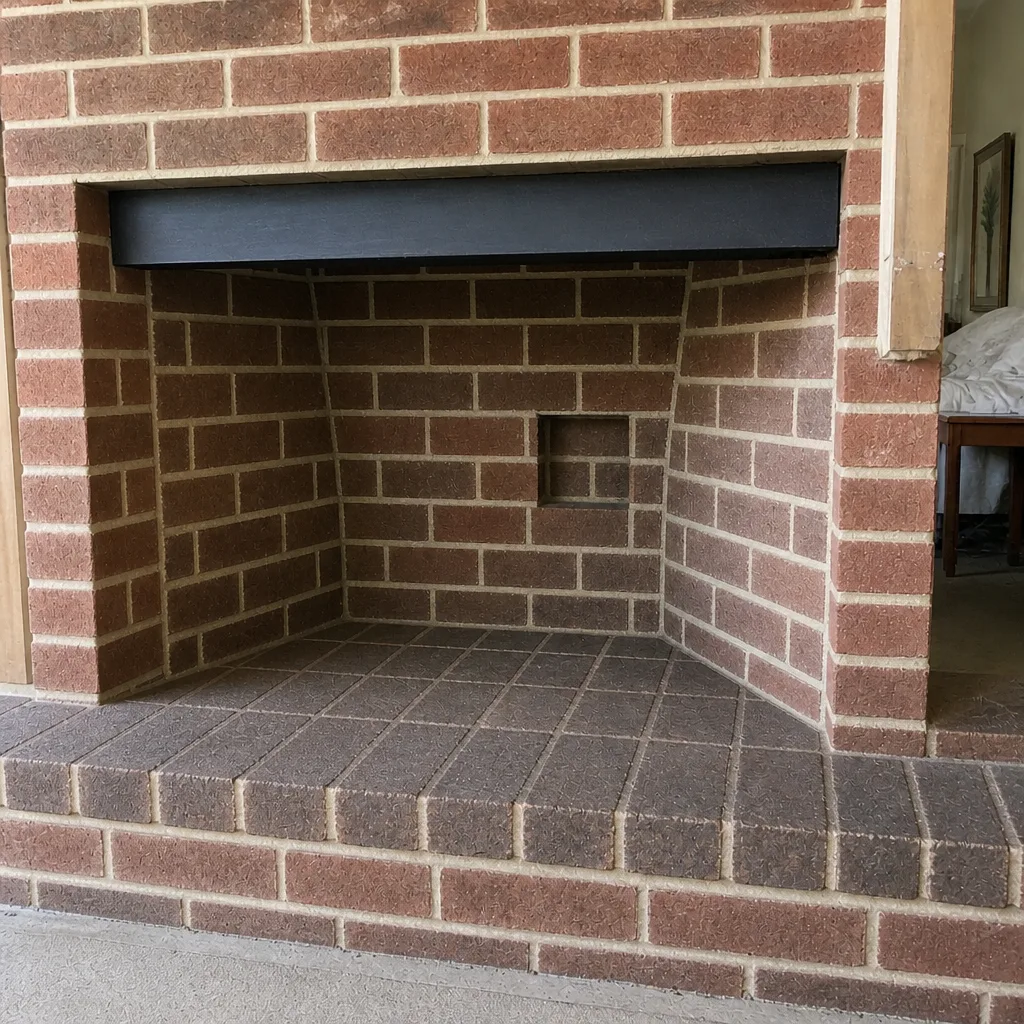
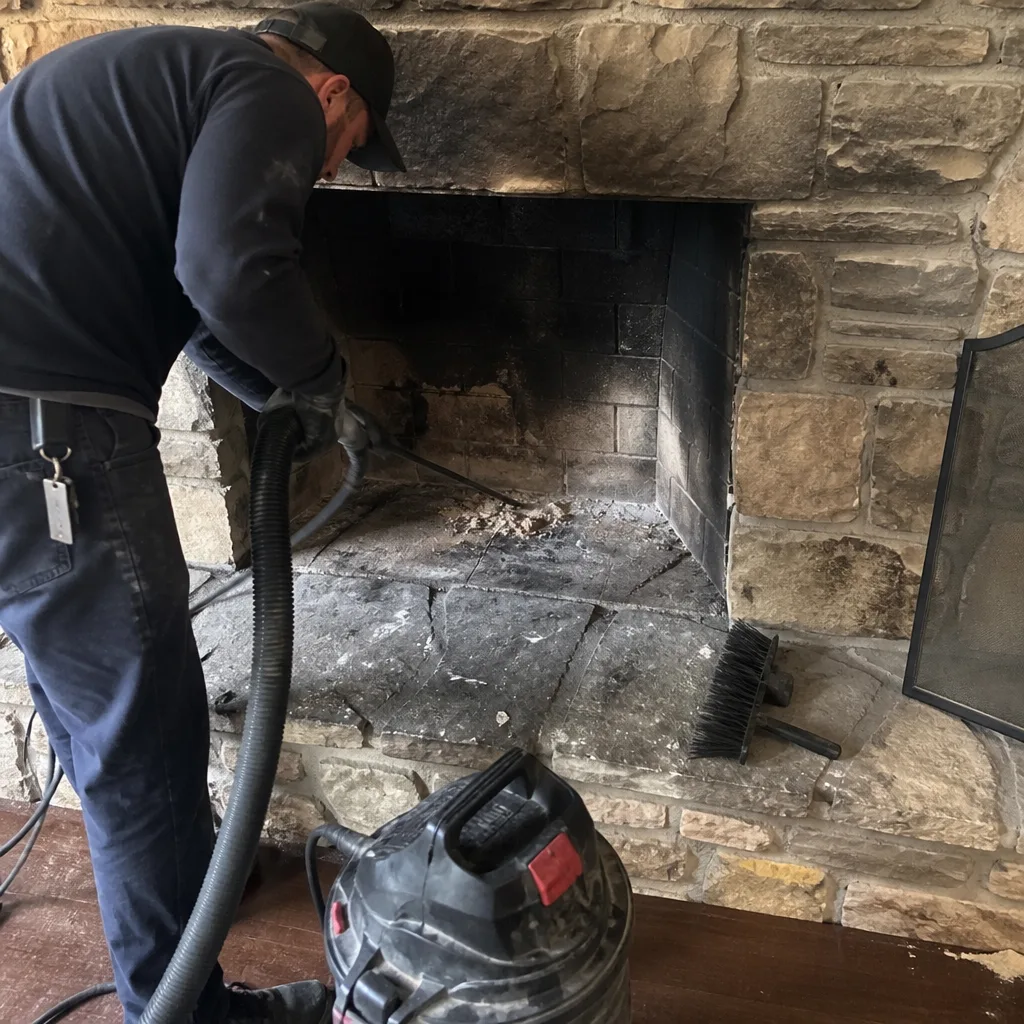
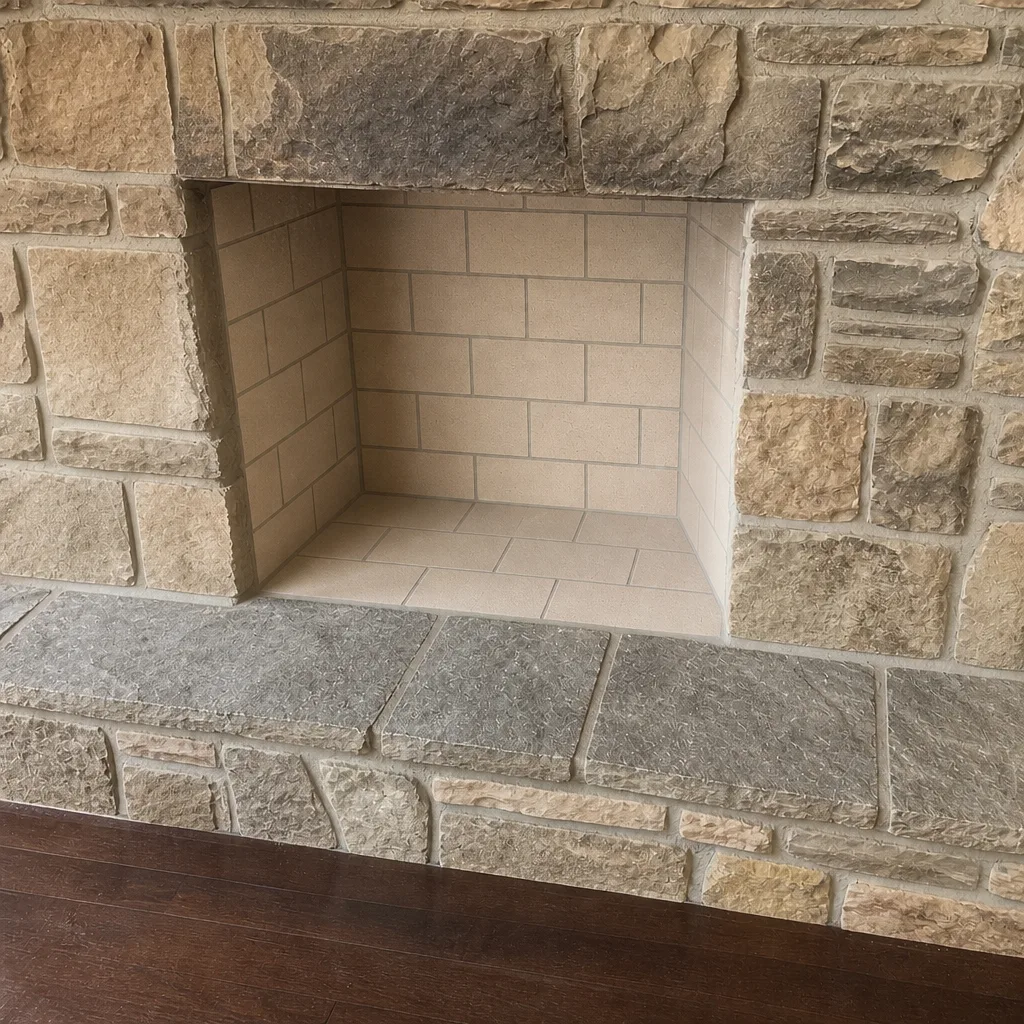
See the difference
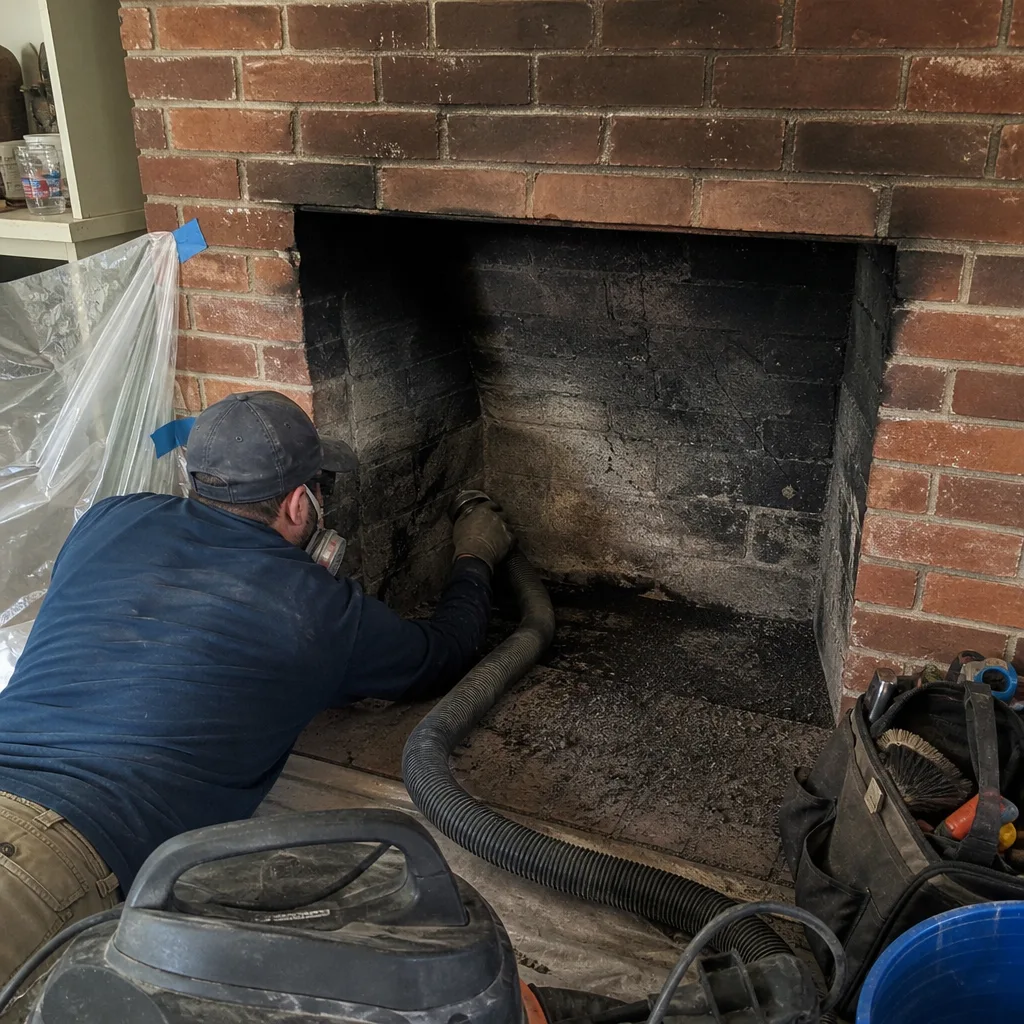 Before
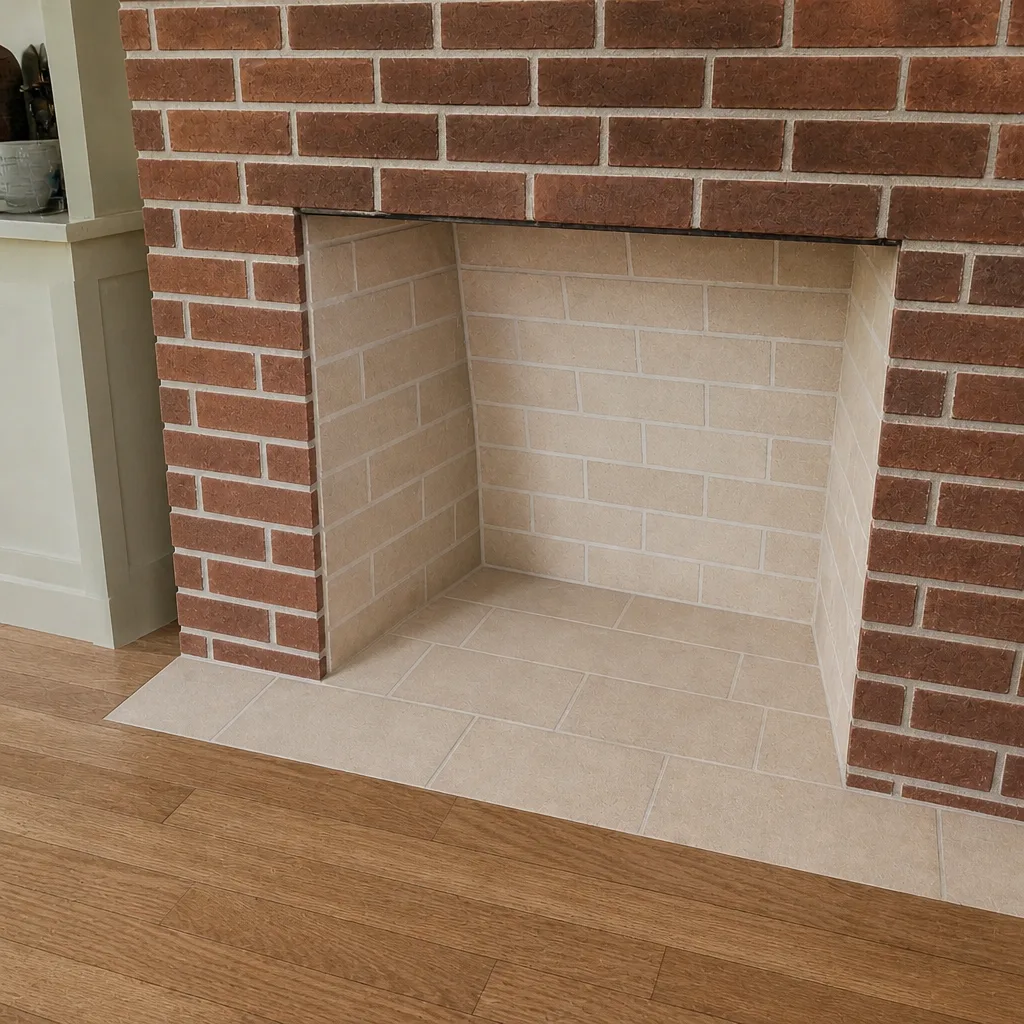 After
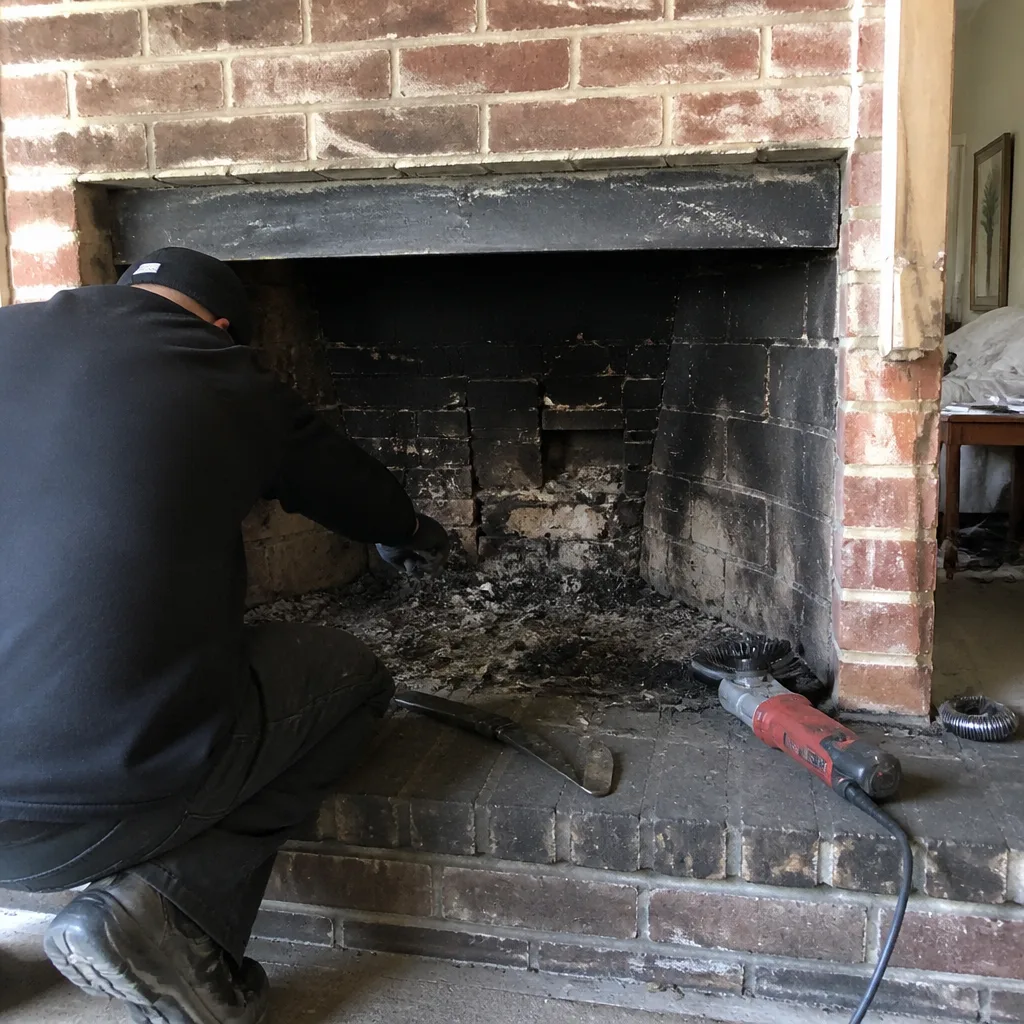 Before
 After
 Before
 After
When to Call a Professional
Call a professional when you see any moisture symptom (efflorescence, ceiling staining, spalling brick, rust on the damper), when you smell creosote in warm weather, when smoke rolls into the room, or when a firebox crack runs through the firebrick rather than the mortar. Those signs rarely correct themselves, and the cost of waiting is usually a bigger repair. The first step in our process is always a diagnostic inspection, not a quote. We look at the firebox, flue, crown, cap, and flashing, and we show you what we find before we recommend anything. Chimney Sweep Northeast Raleigh offers free estimates in Northeast Raleigh. Call (855) 726-7508. We answer 24/7. Fast dispatch from 7am to 7pm, Sunday through Friday.
Frequently Asked Questions
Yes, if you burn wood at all, an annual inspection is the standard, and a sweep is needed when buildup reaches a point where it should come off. Even a few fires a season leave creosote on the flue walls. Acrid summer odor is a sign you’ve reached the point where sweeping makes sense. Call (855) 726-7508 for an exact quote on a sweep and inspection. Estimates are free.
The clearest sign is water showing up where it shouldn’t: white efflorescence on the exterior, brown staining on the ceiling near the chase, or rust on the damper. Those point to a moisture path through the structure, which a sweep alone won’t fix. A diagnostic inspection separates the two. Call us and we’ll walk you through what you’re seeing.
No, but it’s a clue worth taking seriously. Efflorescence means water is moving through the masonry from inside out, and the source is usually the crown, flashing, cap, or liner. Light staining that brushes off and never returns is a small concern. Staining that comes back after every wet season points to a water source that’s still active. Either way, an inspection finds the source.
That acrid summer odor is creosote volatilizing in the heat, which means there’s enough buildup on the flue walls to react to warm weather. A musty smell instead points to moisture and organic debris. Both are addressed by a sweep, and both are worth booking before the fall rush.
Smoke rollout usually means one of three things: a blockage in the flue, a draft problem, or negative pressure pulling air down the chimney in a tightly sealed home. Cracking a window in the same room often confirms negative pressure. The only way to know for sure is an inspection. Call (855) 726-7508 and we’ll schedule one. We answer 24/7.
You can safely check from the ground: look up for a cap, a cracked crown, and vegetation on the chase exterior. Never climb the roof to inspect it yourself. Anything involving the flue, the firebox, or the top of the chimney needs a professional, both for safety and for a real look inside. Our technicians have up to 14 years of experience.
The Bottom Line
Warning signs on a chimney fall into cleaning issues, moisture issues, and structural issues, and telling them apart early is what saves you from a rebuild. White staining is a moisture signal, not a cosmetic one. Brown ceiling stains point to the crown or the flashing, and both need checking. Summer acrid odor means creosote has built up. Smoke rollout can come from a blockage, a draft problem, or negative pressure. Firebox cracks through the firebrick need attention before the next fire. The signs you can see from the ground (cap, crown, chase exterior) are worth checking every season. They aren’t a substitute for an inspection, but they’ll tell you when to call. When the signs point to work, we’re set up to handle the sweep, the inspection, and the repair, using contractor-grade materials from brands like Gelco and Olympia Chimney. One company, one visit, no handoffs.
Ready to book a sweep or inspection? Chimney Sweep Northeast Raleigh offers free estimates in Northeast Raleigh. Call (855) 726-7508. We answer 24/7. Fast dispatch from 7am to 7pm, Sunday through Friday.
Written by the team at Chimney Sweep Northeast Raleigh.