
Last updated November 23, 2026
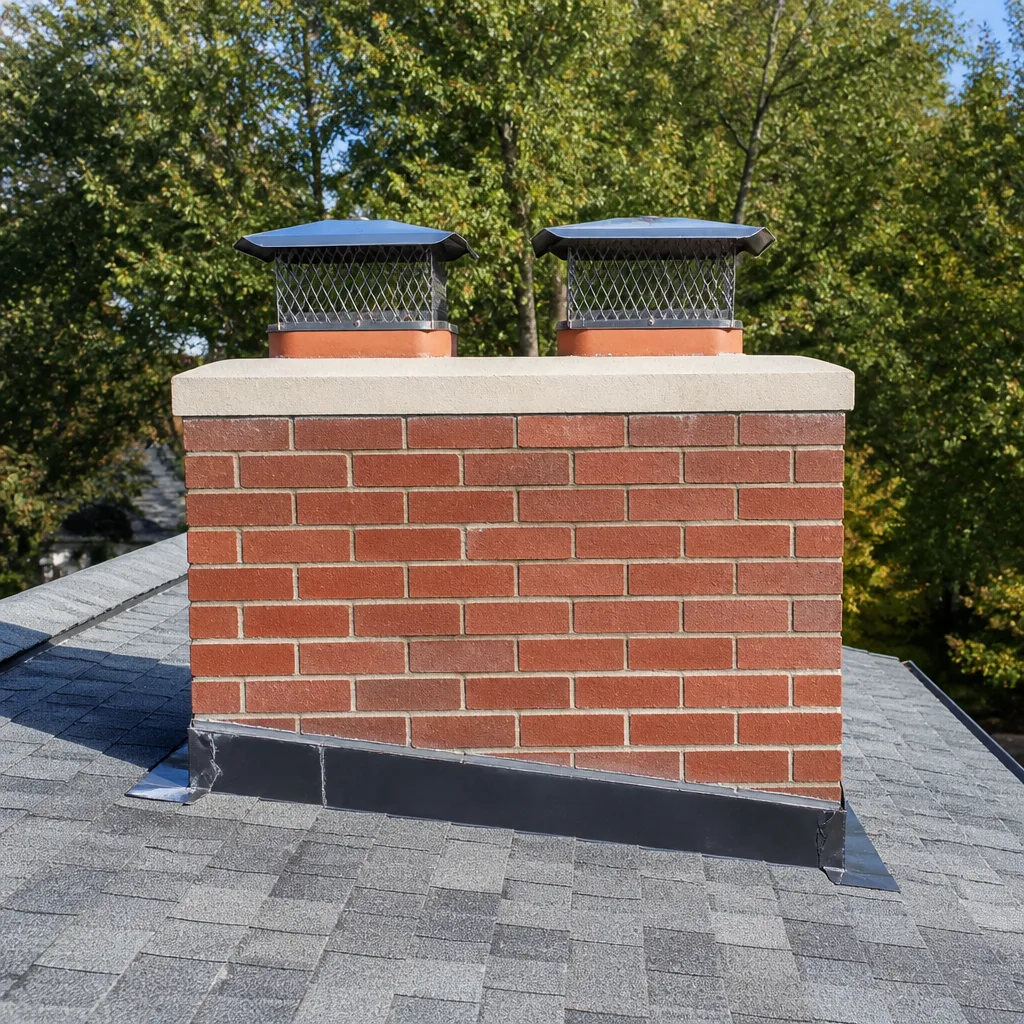 Sweep & inspection
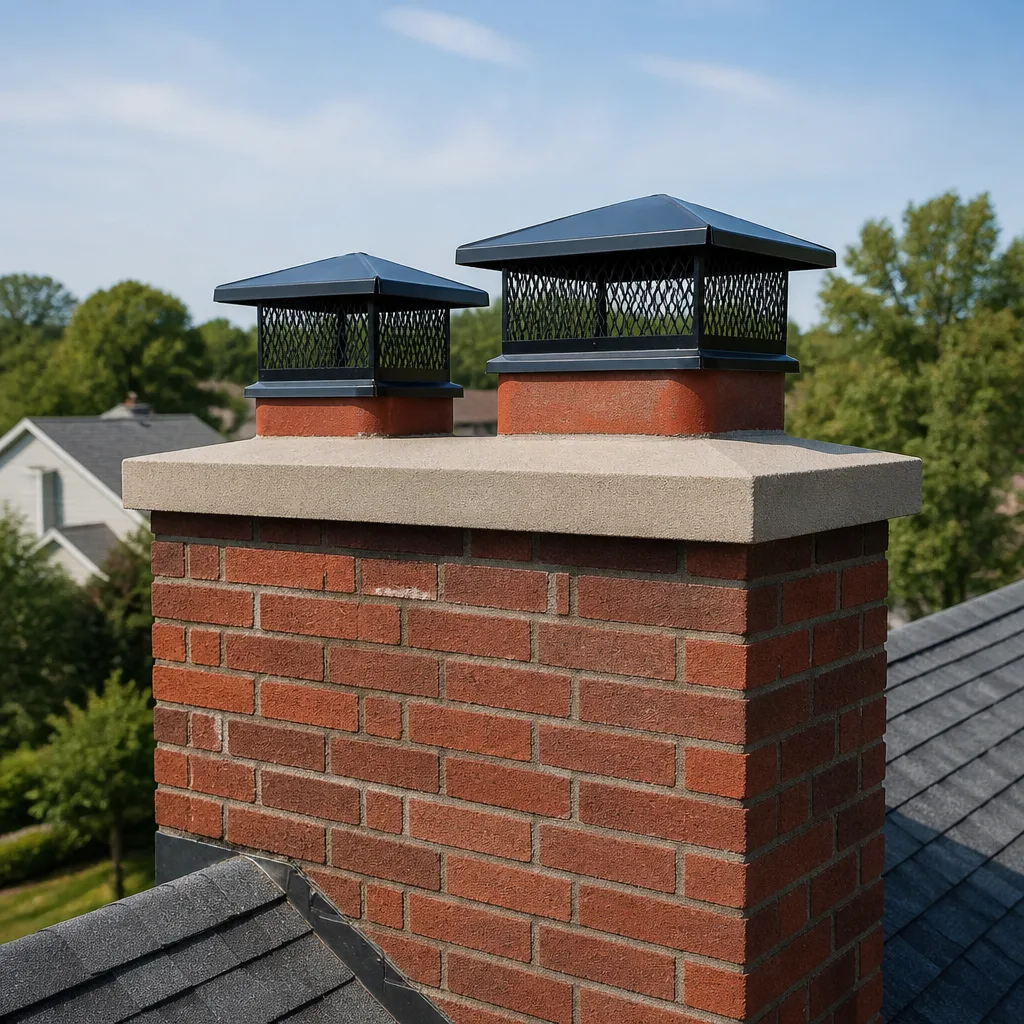 Caps & crowns
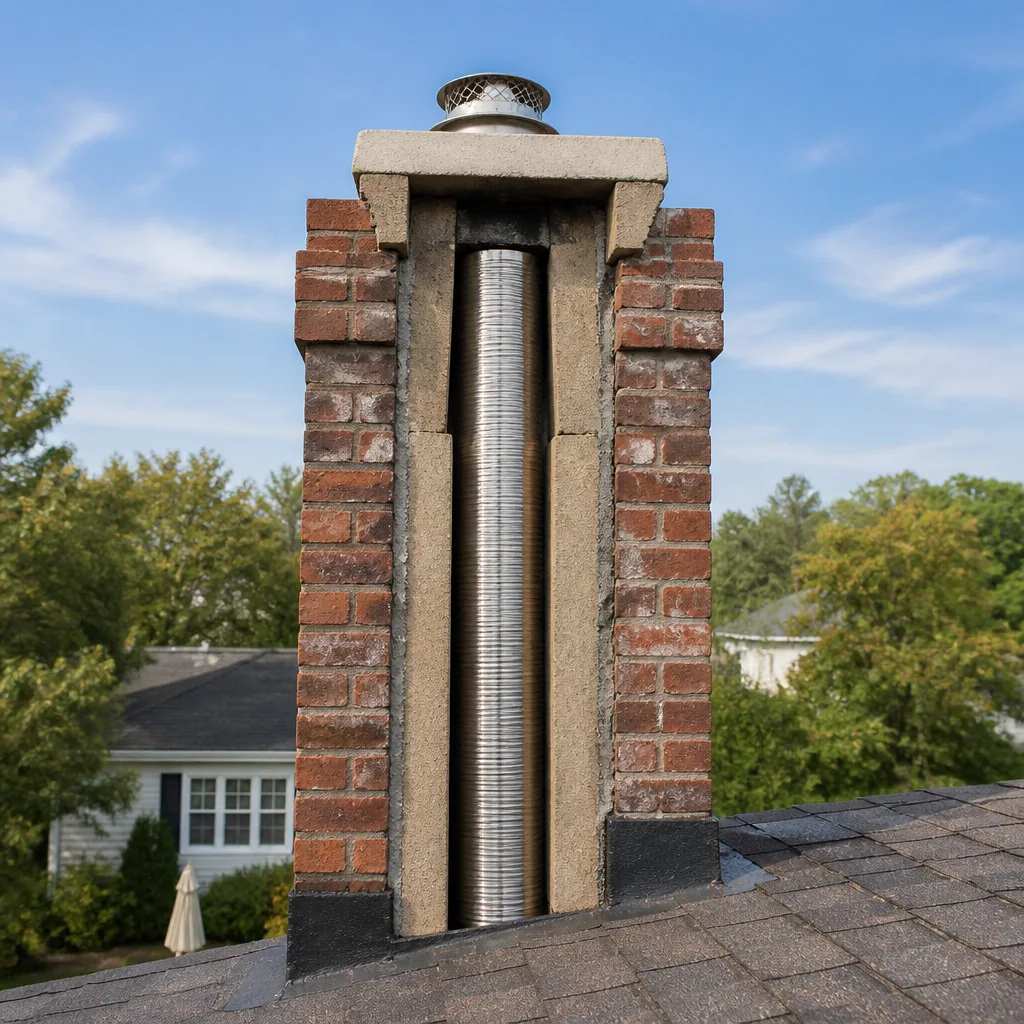 Flue relining
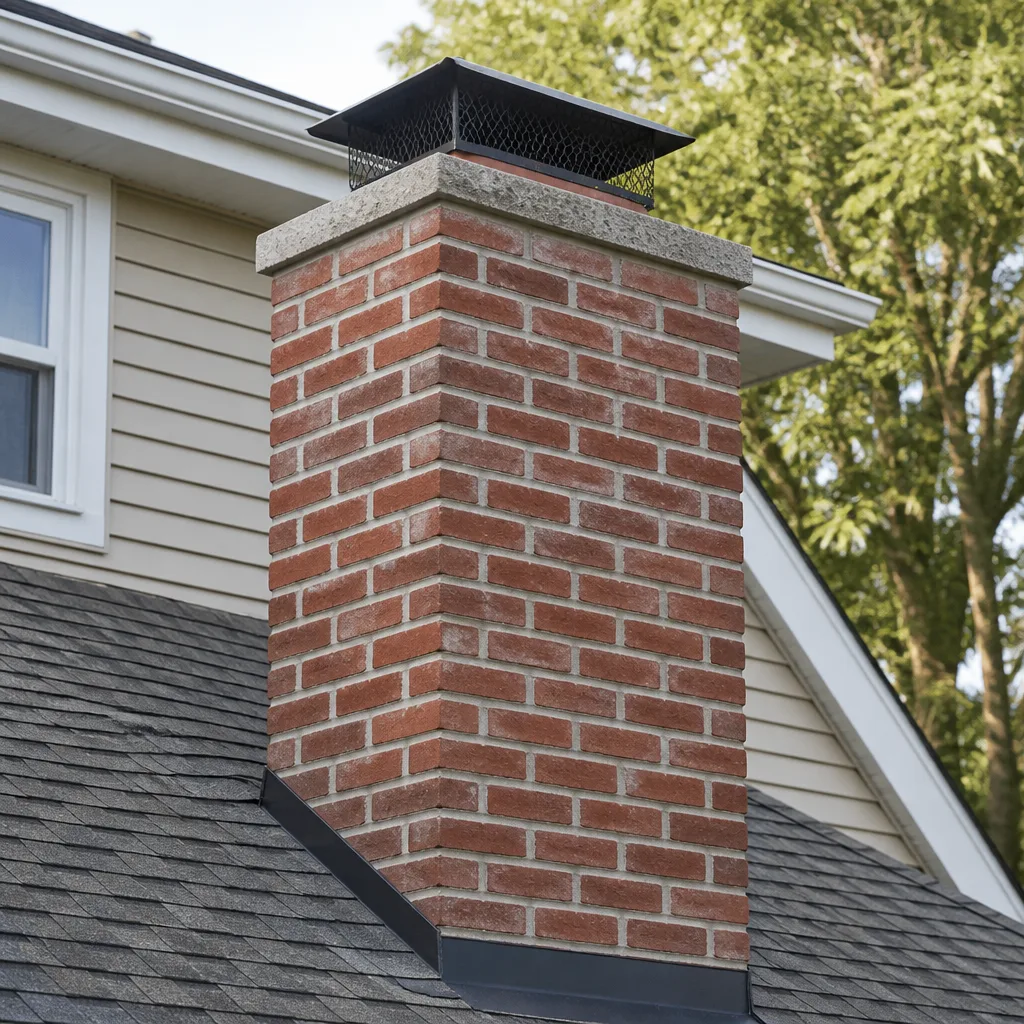 Masonry repair
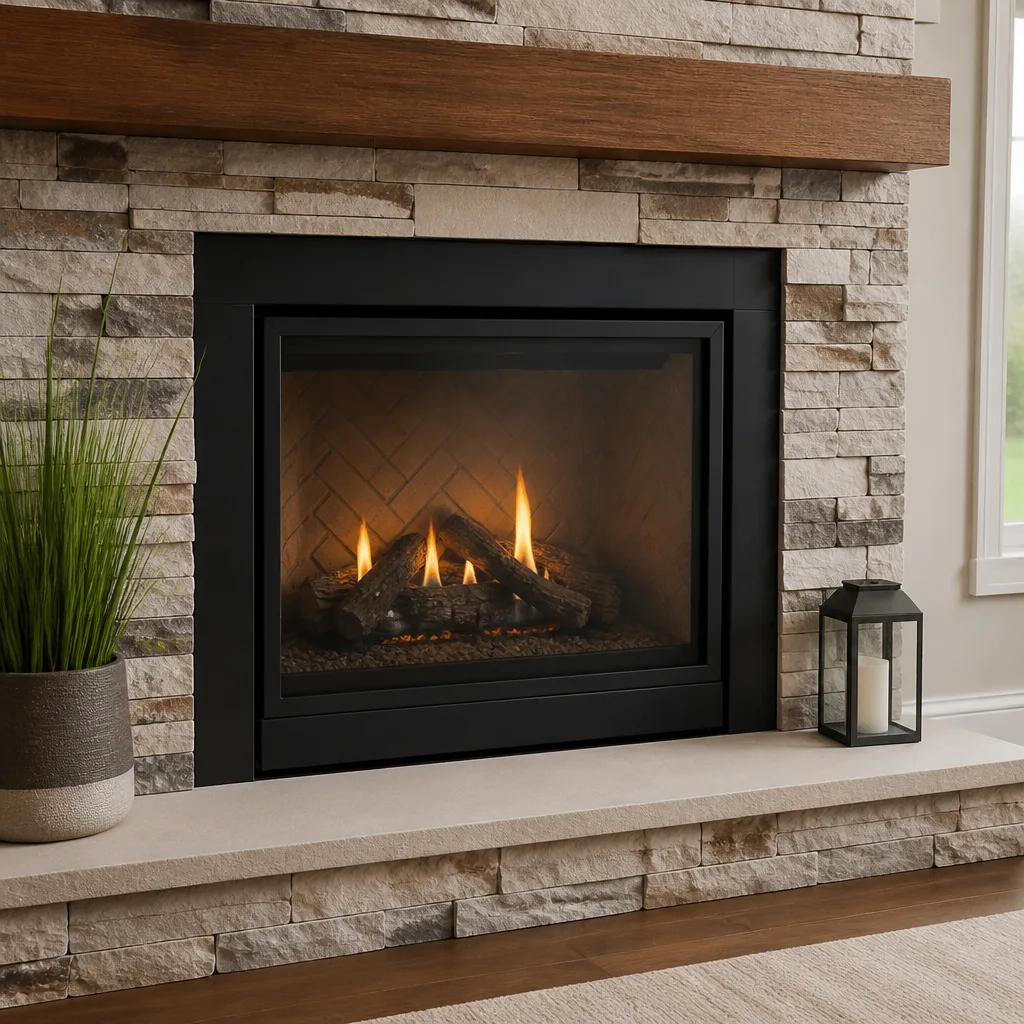 Gas fireplace service
Level 1 sweep and inspection to the NFPA 211 annual standard - flue, crown, cap, and flashing checked and photographed
Chimney sweep logs do not sweep chimneys. They loosen some creosote - which then falls where a brush and vacuum still have to collect it.
DIY vs Professional Chimney Cleaning: The Northeast Raleigh Homeowner’s Decision Guide
Chimney brush kits are a legitimate product, and they remove stage 1 creosote effectively. What they don’t come with is a camera that shows you whether the tile liner behind that now-clean flue wall has a crack running 18 inches through the smoke chamber. That’s not really a DIY versus professional question. It’s a tools question. Most homeowner guides frame this decision around what a sweep costs, and that framing hides the actual issue: a brush removes soot, but it cannot evaluate liner integrity, smoke chamber condition, or draft performance, which are the three things that decide whether your fireplace is safe to light. This guide covers what DIY handles competently, what it structurally cannot, and where the line sits for a Northeast Raleigh home that burns wood every winter.
Quick Answer
DIY chimney cleaning is appropriate as interim maintenance between professional visits, and only for stage 1 creosote in accessible flue sections. It is not a substitute for a professional cleaning plus a Level 2 inspection in any home that burns wood regularly, because the inspection is the part that finds cracked liners, gaps in the smoke chamber, and draft problems that a brush cannot see. If you burn more than a cord of wood a year in Northeast Raleigh, plan on a professional evaluation at least annually and use your own tools for the in-between soot.
Styles & brands we work with
- Sweep & inspection
- Caps & crowns
- Flue relining
- Masonry repair
- Gas fireplace service
Table of Contents
- Why the Real Question Is Diagnostic Access, Not Cost
- What DIY Chimney Cleaning Actually Covers Well
- What DIY Structurally Cannot Address
- The Risk Scenario Where DIY Cleaning Backfires
- The Equipment Cost Reality Check
- A Decision Framework You Can Actually Use
- How Northeast Raleigh Homes Change the Equation
- What a Professional Visit Includes That a Brush Kit Doesn’t
Why the Real Question Is Diagnostic Access, Not Cost
Almost every DIY vs professional chimney cleaning article opens with a price comparison, and that’s the least useful place to start. A homeowner with a brush and a shop vac can remove loose soot. What that homeowner cannot do is tell you whether the flue is sound. Those are two different jobs that happen to occupy the same physical space.
Think about what a chimney actually is. The flue carries smoke and hot gases up and out. The liner protects the masonry around that flue from heat and from condensation. The smoke chamber smooths the transition from the firebox into the flue so exhaust doesn’t stall. The cap and crown keep water out of the whole assembly. Cleaning touches one surface of one component. Evaluating condition touches all four, and it requires a camera, a light source you can aim, and the experience to read what the camera shows.
In our experience, the calls that matter most are the ones where a homeowner did clean the flue and did it well. The flue looked fine because the creosote was gone. But creosote hides things. A hairline crack in a clay tile, a joint that has opened a quarter inch, a rusted section of a prefab liner behind a layer of soot: none of these announce themselves once the wall is clean, because the surface is clean and looks right. That’s the diagnostic gap. The brush did its job. Nobody checked the thing the brush can’t see.
So the honest answer to “should I clean my own chimney” is: yes, for the soot, between professional visits. And no, for the question of whether the system is safe to operate. Those aren’t the same task, and treating them as one is how homeowners end up confident about a chimney nobody has actually evaluated. If you want a real picture of liner condition and smoke chamber integrity, that starts with a Chimney Sweep Northeast Raleigh visit and a proper inspection, not a taller ladder.
What DIY Chimney Cleaning Actually Covers Well
Let’s give DIY its due. A homeowner with reasonable tools and some patience can do three things well, and there’s no reason to pay someone for any of them if you’re comfortable on a ladder.
1. Stage 1 creosote removal from accessible flue sections
Stage 1 creosote is the fluffy, soot-like deposit that builds up in the first weeks of burning and brushes off easily. A poly brush sized to your flue, worked from the top down or bottom up depending on your setup, removes it. This is real maintenance, not busywork. Keeping stage 1 buildup down is exactly what prevents the harder deposits from forming.
2. Firebox and ash pit cleanup
Shoveling out ash, vacuuming the firebox floor, and clearing the grate area is straightforward. It also matters more than people think, because excess ash depth interferes with airflow under the fire and can make a fire burn smoky. A shop vac with a fine filter handles this. Just make sure the fire has been out for days, not hours.
3. Ground-level visual inspection of the cap and crown
You can stand in the yard with binoculars and see a lot. A cap that’s rusted through, a crown with a visible crack, a chimney with vegetation growing out of the masonry joint, a missing cap altogether: these show up from the ground. That’s a legitimate check and worth doing a few times a year, especially after a storm.
What ties these three together is that they’re all surface tasks. They involve things you can see or reach. That’s the dividing line, and it’s a clean one. Anything you can see from outside or reach from inside is fair game for a homeowner who wants to stay ahead of buildup in Northeast Raleigh.
What DIY Structurally Cannot Address
Here’s where the ceiling on DIY becomes structural rather than a matter of skill or effort. Some of what determines chimney safety simply can’t be observed from the places a homeowner can reach. Four categories stand out.
- Liner condition. The flue liner is the barrier between combustion gases and the wood framing and masonry around it. Cracks, spalling, open joints, and gaps between tile sections are common in older chimneys, and they’re invisible from inside the flue without a camera. A camera scope run up the flue shows the whole interior. A flashlight aimed up from the firebox shows the first few feet.
- Smoke chamber integrity. The smoke chamber sits directly above the damper and below the flue, and it’s angled and corbelled in a way that traps creosote and hides damage. It’s also one of the first places a chimney fire does damage. Evaluating it requires getting eyes and a camera into a space most homeowners don’t even know exists.
- Draft performance testing. Draft is what pulls smoke up and out instead of into the room. It’s affected by flue sizing, chimney height relative to the roofline, blockages, and pressure relationships inside the house. You can’t assess draft with a visual check. It requires measurement, and it requires understanding how the chimney interacts with the rest of the house.
- Combustion appliance zone pressure diagnostics. In tighter modern homes, the interaction between exhaust fans, HVAC equipment, and the chimney’s own draw can create negative pressure that pulls combustion gases the wrong direction. This is the CAZ test, and it’s not something a homeowner can perform without pressure gauges and the training to interpret them.
None of this is a knock on homeowners. It’s a statement about tools. You can’t evaluate what you can’t see or measure, and the equipment that lets a professional see and measure is specialized. Our technicians have up to 14 years of experience reading exactly these conditions, and even they don’t do it by eye.
The Risk Scenario Where DIY Cleaning Backfires
There’s a specific pattern worth understanding, because it’s the one where DIY cleaning makes things worse rather than better. It doesn’t involve a sloppy job. It involves a good job that creates false confidence.
- The homeowner cleans the flue thoroughly. The brush does its work. Stage 1 creosote comes off. The flue looks clean from the firebox and from the roof.
- A liner crack under the creosote gets exposed, not fixed. The creosote was covering a crack in a clay tile or a gap at a joint. Cleaning removed the covering. The crack is still there, now more visible if you had a camera up there, but nobody’s looking with a camera.
- The homeowner assumes clean means safe. The visible evidence supports the assumption: no soot, clear flue, no obvious problem. The mental checklist gets marked complete.
- The first fire of the season lights the system under load. A crack in the liner lets heat and gases reach the masonry or framing behind it. That’s where a chimney fire starts, and that’s where carbon monoxide can migrate into the home instead of up the flue.
The reason this pattern matters in Northeast Raleigh specifically is the burning season. Fires go cold for months here. The first cold night in October or November is when the system gets tested, and it’s the worst possible time to discover that a liner was compromised the whole time. A professional cleaning plus inspection before the season starts closes that gap. A DIY cleaning alone widens it, because it replaces a visible warning sign with a clean surface.
This is also why we treat the inspection as a diagnostic step rather than a formality. When a technician runs a camera up your flue, you should see the feed. If there’s a crack, you’ll be looking at it on the monitor at the same time the technician is. Nothing gets recommended without camera evidence you can see for yourself, and if the liner is fine, we say so and you can go back to your own brush for the routine work.
The Equipment Cost Reality Check
Here’s a number worth sitting with. A proper DIY setup that can actually compete with a professional cleaning runs roughly $800 to $2,000. That’s not a brush and a shop vac. That’s the full kit. If the cost argument for DIY is the whole reason you’re considering it, the math deserves a closer look.
What a capable DIY setup actually costs
- Rotary cleaning system with correctly sized rods and a poly or wire head: this is what you need to actually clean a flue of any length without working blind. A hand brush on a stick gets you the first few feet. It doesn’t get you the top of a two-story flue with any control.
- Camera scope with a long enough reel for your flue: this is the piece that lets you see liner condition. Without it, you are cleaning blind above the first few feet.
- HEPA vacuum rated for chimney work: a regular shop vac will throw fine soot into the air of your home. A HEPA setup with the right filtration captures it. This is the piece most homeowners skip, and it’s the one that decides whether the job leaves your living room cleaner or dirtier than it started.
- Drop cloths, ladder, and personal protection: the boring stuff that makes the job safe and keeps soot out of the house.
Add it up and you’re looking at a serious outlay for equipment you’ll use once or twice a year. Compare that to the free estimate you can get from a professional, and the case for owning thousands of dollars of gear to avoid an annual service starts to weaken considerably. The camera alone, which is the piece that actually answers the safety question, costs more than several years of professional visits.
The realistic DIY use case isn’t competing with a professional. It’s supplementing one. If you already own a brush and a shop vac, using them on your own between professional cleanings is smart. If you’re considering buying a full rotary system and camera to replace the professional visit, run the numbers first, because the equipment pays for itself on a schedule that’s measured in years.
A Decision Framework You Can Actually Use
Rather than a rule of thumb, here’s a way to think through your own situation. Work through these questions in order. The first one that points professional is your answer.
- Do you burn wood more than occasionally? If you’re lighting fires most weeknights through the winter, you’re a candidate for an annual professional cleaning plus a Level 2 inspection. That’s the baseline. DIY cleaning fits into the gaps, not in place of the annual visit.
- Has the chimney ever been inspected? If you’ve owned the home for years and no one has run a camera up the flue, that’s overdue regardless of how carefully you’ve been cleaning. A visual check doesn’t count as an inspection.
- Is there any indication of a liner problem? A rusted damper, a flue that looks glazed, visible cracks from the firebox, a chimney that smokes into the room when the fire first lights: any of these point to a professional diagnosis, and cleaning first won’t help.
- When was your last fire, and when is your next? If you’ve had no professional visit since last season, book one before the first fire of the coming season. A chimney cleaning and inspection in the shoulder months is when the diagnostic work is most valuable.
- Do you already own the tools? If you own a brush and a vacuum, use them for interim maintenance. If you’re about to buy a rotary system and camera, pause and get the professional visit first. You’ll learn whether your chimney even needs the equipment.
The clean summary: DIY is interim maintenance between professional visits, never a substitute for a Level 2 inspection in a home that burns wood regularly. The Level 2 inspection is the piece that answers the safety question, and no brush kit on the market replaces it. If you’re not sure which category your home falls into, a chimney sweep and inspection is the cheapest way to find out, and it gives you a baseline for everything that follows.
How Northeast Raleigh Homes Change the Equation
Homes in Northeast Raleigh present some specific conditions that favor professional evaluation over DIY, and it’s worth walking through why. This isn’t unique to one neighborhood, but the combination of housing stock and climate here makes the diagnostic gap wider than it might be elsewhere.
Housing stock and chimney age
Northeast Raleigh has a broad mix of homes, from older construction with masonry fireplaces to newer subdivisions where prefab fireplaces with metal liners are common. Both types need evaluation, but they fail in different ways. Masonry chimneys in older homes develop cracked clay tiles and deteriorating mortar joints. Prefab chimneys have a metal liner with a defined service life, and when that liner fails, the failure isn’t always visible from the firebox. In both cases, the camera is what tells you where you stand, and the age of the home is a reason to look sooner rather than a reason to skip looking.
The burning season here is short and intense
Piedmont North Carolina doesn’t burn wood eight months a year. Fires run mostly through the coldest weeks, and then the fireplace sits idle through the long warm stretch. That pattern creates two conditions worth knowing about. First, the first fire of the season is the most demanding moment for the system, because it’s been sitting all summer and getting lit for the first time in months. Second, the idle season is when water intrusion does its damage. Rain getting past a failing cap or crown can soak masonry all summer and soften mortar joints by the time you need the chimney again. A cap and crown check before the season starts is worth more here than a brush pass.
Modern homes and pressure relationships
Newer homes built to tighter envelopes in Northeast Raleigh change how the chimney performs. The house leaks less air, which means exhaust fans in bathrooms and kitchens, and HVAC equipment, can more easily depressurize the space around the fireplace. That pressure change can pull smoke the wrong way, or worse, pull combustion gases back into the home. This is where CAZ pressure diagnostics matter, and it’s not something a homeowner can check with a flashlight. A house that won’t draft correctly is a safety problem, not a maintenance problem, and the diagnosis requires measurement.
If your chimney has been sitting since spring, or you’ve just moved into a Northeast Raleigh home and don’t know its history, a seasonal evaluation is the right first step. Our team handles fireplace repair alongside the diagnostic work, so if the inspection turns up a damper that doesn’t seal or a firebox that needs attention, it gets handled in the same visit rather than sending you to a second contractor.
What a Professional Visit Includes That a Brush Kit Doesn’t
The gap between a DIY cleaning and a professional visit is mostly about what happens around the brush. Both remove soot. Only one evaluates the system. Here’s what comes with a professional cleaning and Level 2 inspection, and why each piece matters for a Northeast Raleigh homeowner.
A camera run through the entire flue
The camera is the single biggest difference. It shows liner condition from top to bottom, including the sections a flashlight can’t reach and the joints between tiles where gaps open. You see the feed. That’s the evidence base for any recommendation, and it’s what separates a diagnostic visit from a guess.
A look at the smoke chamber and damper
The smoke chamber is where creosote accumulates in a way that a flue brush doesn’t touch, and it’s where damage hides. A professional inspection checks it, along with the damper’s seal and operation. If the damper is warped or won’t close, that’s a repair we can quote in the same visit.
Cap and crown evaluation
Water intrusion is the leading cause of chimney damage, and the cap and crown are where it enters. We use chimney cap & crown components from Gelco and Famco, which are purpose-built for the job rather than improvised with flashing and caulk. A cap that fits properly keeps water, animals, and debris out of the flue. A crown that’s cracked is letting water soak the masonry from the top down. Both get checked during the inspection and addressed if they’re the problem.
A liner assessment with real options
If the camera shows a deteriorating flue interior, there are more paths than full relining. HeatShield is a resurfacing system for damaged flue liners that addresses deterioration without the cost of full liner replacement, and it’s a repair option many sweep-only operators can’t perform. We’re authorized to work with HeatShield and Olympia Chimney, along with DuraFlex, Gelco, Famco, and Copperfield, which are the names professional chimney and venting work is specified with. When a liner does need replacement, DuraFlex and Olympia Chimney liners give us contractor-grade materials for the job.
The point isn’t to sell a liner. It’s to give you a clear picture of condition and a clear range of options, with the evidence in front of you. We work with contractor-grade materials from brands like DuraFlex and HeatShield, and our technicians have up to 14 years of experience reading what a camera shows. If your flue is sound, that’s what we’ll tell you, and you can go back to your own brush between annual visits. If it isn’t, you’ll know why and what it takes to fix it. For a diagnostic inspection with our Northeast Raleigh team, we’ll put the camera feed in front of you and walk through it together.
Common Mistakes to Avoid
- Cleaning the flue and calling it an inspection. Cleaning removes soot. It doesn’t evaluate the liner, the smoke chamber, or draft. If you’ve been brushing the flue for years and no one has run a camera up it, you have a clean chimney with unknown condition, and those are different things.
- Skipping the first-fire check after a long summer. The first fire of the season is when a compromised system gets tested under load. Light it before you’ve had the system evaluated and you’re testing it with everything on the line. Get the inspection done before the cold sets in.
- Buying a rotary kit before getting a professional opinion. A $800 to $2,000 investment in cleaning equipment makes sense only if you know your chimney’s condition and it’s stable. Get the professional visit first and find out what you’re actually maintaining.
- Ignoring the cap and crown because the flue looks fine. The inside of the flue can be spotless while the top of the chimney is soaking through a cracked crown every time it rains. In a climate with a long idle season, water does its damage while the fireplace is cold, and the cap is the first line of defense.
- Cleaning without proper HEPA filtration. A shop vac with a standard filter throws fine soot into the air of your home, and it settles into upholstery and goes into your lungs. When DIY cleaning is done right, the vacuum is rated for it. When it isn’t, the soot ends up somewhere worse than the flue.
- Assuming a newer prefab fireplace needs no attention. Prefab metal liners have a service life, and they fail in ways that aren’t visible from the firebox. A newer home in Northeast Raleigh with tight construction can also have draft problems independent of liner condition. Both need measurement, not eyeballing.
- Waiting for a problem to present itself. Chimneys don’t fail with a warning light. A creosote fire can start in a flue with a compromised liner without any obvious sign beforehand, and carbon monoxide has no smell. The case for regular inspection is that the problems don’t announce themselves.
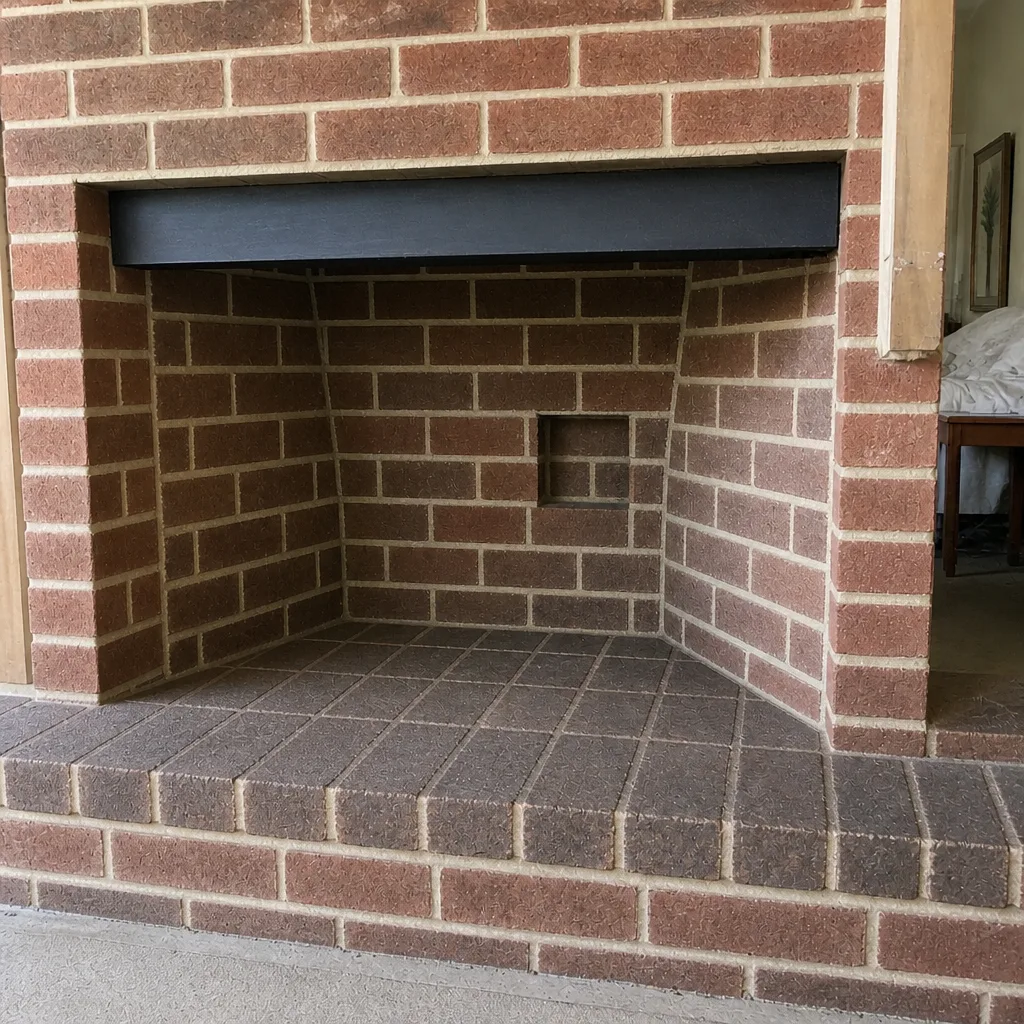
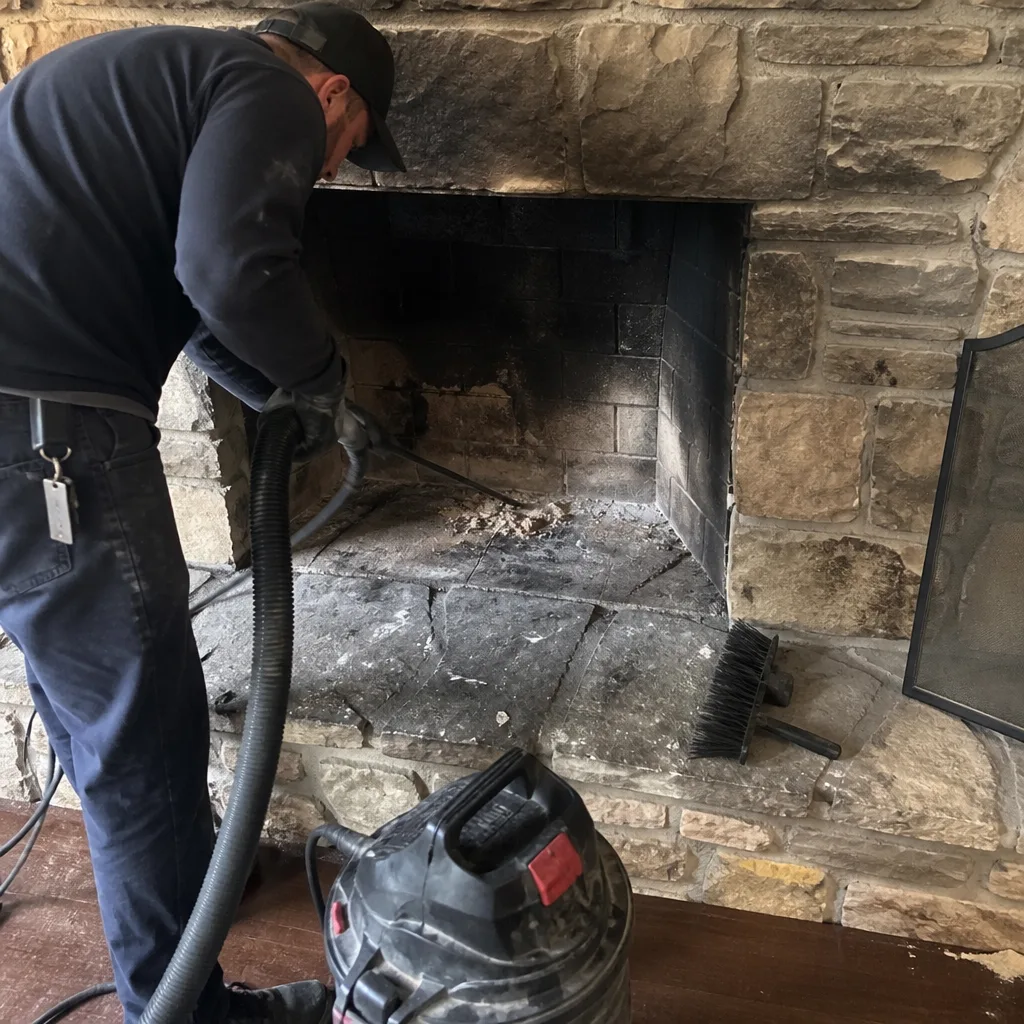
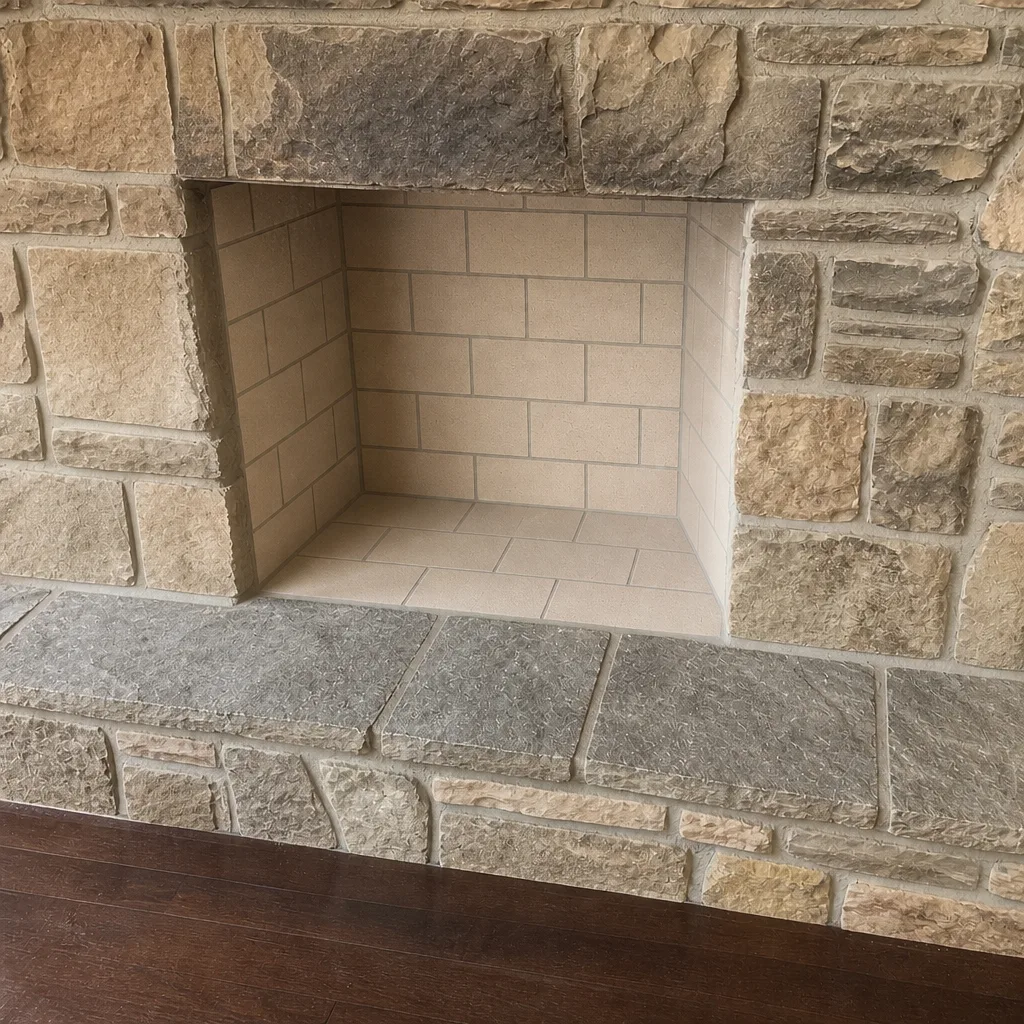
See the difference
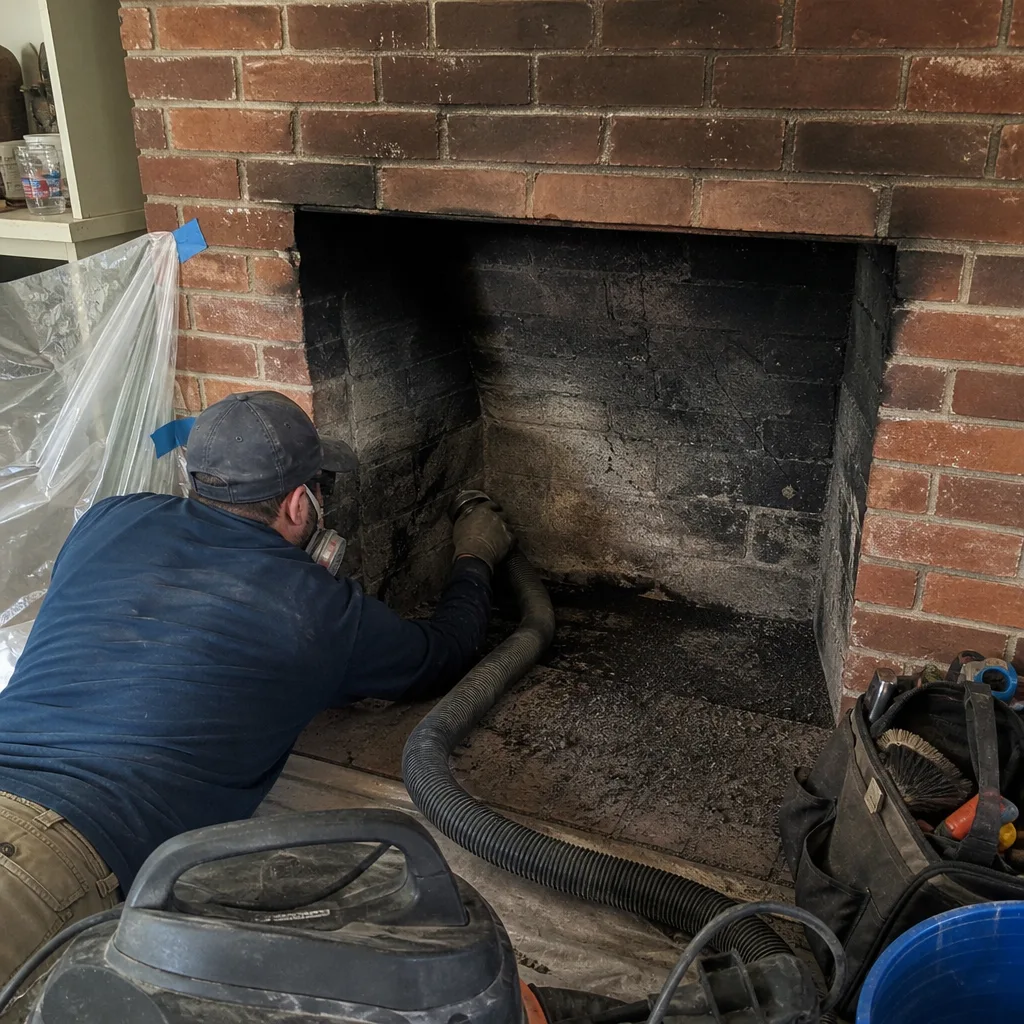 Before
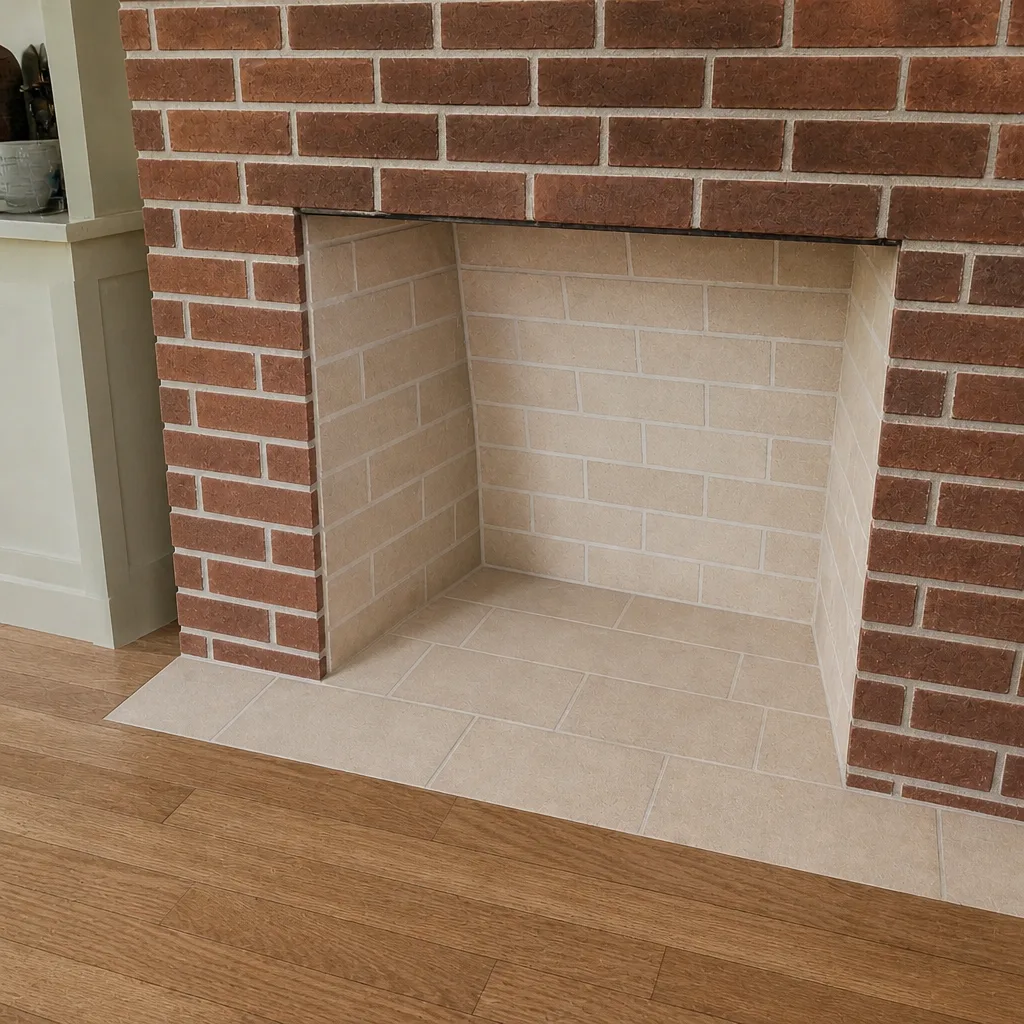 After
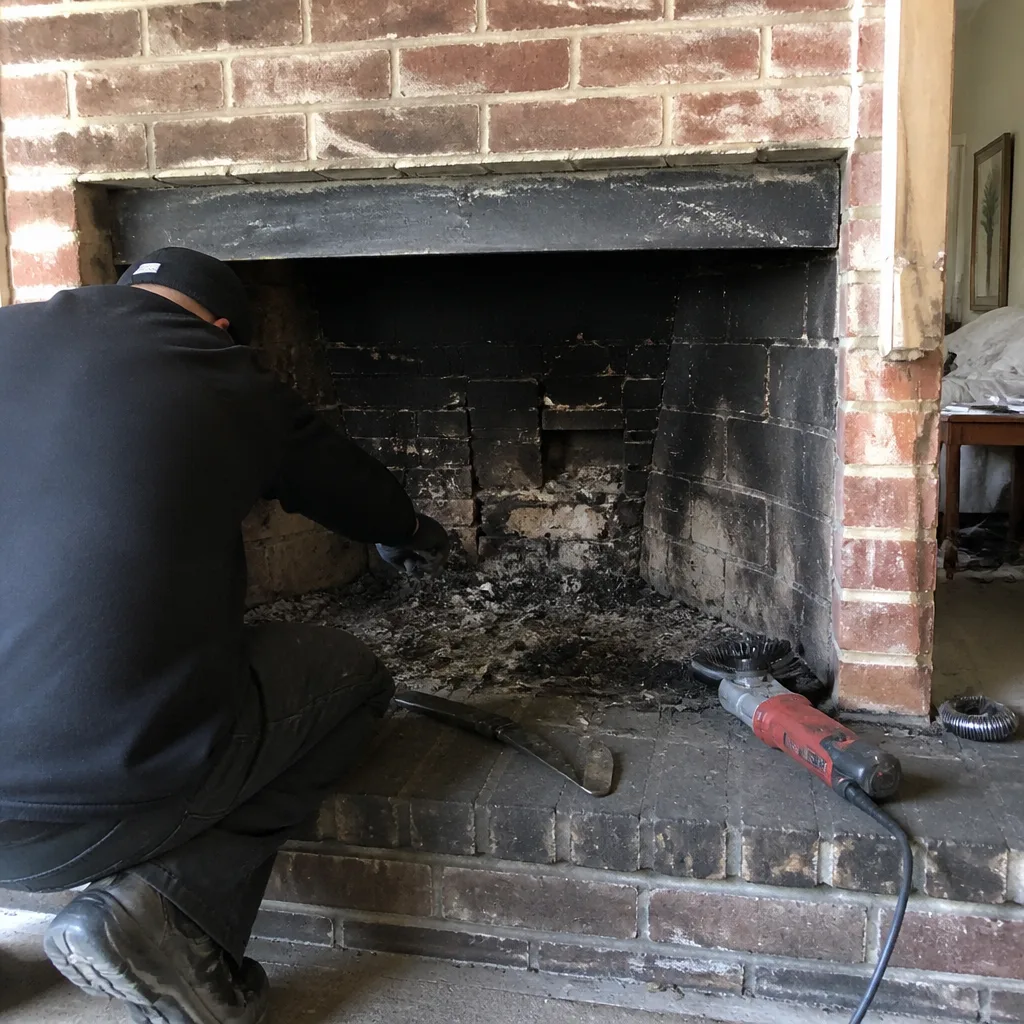 Before
 After
 Before
 After
When to Call a Professional
Call a professional if you’ve had no inspection since before last burning season, if you burn wood regularly, or if you’ve noticed a flue that smokes into the room, a damper that won’t seal, or visible cracks from the firebox. Call if you’ve just bought a home in Northeast Raleigh and don’t know the chimney’s history, or if the cap or crown looks damaged from the ground. Call before you buy a DIY rotary system, so you know what you’re maintaining. And call after any chimney fire, even a small one, because the interior damage is what matters and you can’t see it from the firebox. Chimney Sweep Northeast Raleigh offers free estimates in Northeast Raleigh. Call (855) 726-7508. We answer 24/7. Fast dispatch from 7am to 7pm, Sunday through Friday.
Frequently Asked Questions
You can clean your own chimney for stage 1 creosote between professional visits, but you can’t skip the professional entirely if you burn wood regularly, because the cleaning isn’t the part that keeps you safe. The inspection is. A brush removes soot from the flue wall. A camera run by a trained technician finds the liner crack, the smoke chamber damage, and the draft problem that a brush can’t see. Use your own tools for the interim work and get a professional cleaning plus inspection on a regular schedule. Call (855) 726-7508 to book one and get a free estimate.
We set the price per job by written estimate, and the estimate is free, so the most reliable path is to have us look at your chimney and give you a written figure. The cost depends on the flue length, the level of creosote buildup, and whether the inspection turns up repair work, so a phone quote without a look isn’t worth much. Comparing that against the $800 to $2,000 a capable DIY setup costs is the more useful math. Call (855) 726-7508 for an exact quote. Estimates are free.
You need a new liner if the camera shows one is necessary, and you can watch the camera feed and see the condition of the liner for yourself during the inspection. Nothing gets recommended without camera evidence you can see. In many cases the flue is sound and no liner work is needed at all, and we’ll tell you that. When deterioration is present, HeatShield resurfacing is an option that addresses the flue interior without full relining, so replacement isn’t the only path. Call (855) 726-7508 to schedule an inspection and see the evidence.
Once a year if you use the fireplace regularly, which for most Northeast Raleigh homes means an annual cleaning plus a Level 2 inspection before the burning season starts. The short, intense burning season here makes the timing straightforward: get it done in the shoulder months, before the first cold night, so the system has been evaluated before it gets tested under load. If you burn more heavily or notice draft issues, ask for a professional opinion on whether your schedule should be tighter. Call (855) 726-7508 for a free estimate and a seasonal evaluation.
The main risk is operating a chimney with an undetected liner or smoke chamber problem, because that’s the condition that lets heat reach the framing or lets carbon monoxide migrate into the home. Creosote fires are the other risk, and a compromised liner makes them more dangerous. Neither problem has an obvious warning sign, which is exactly why the inspection exists. Skipping it doesn’t cause damage on its own, but it means you don’t know whether damage is already there. Call (855) 726-7508 to find out where your chimney stands.
A newer home still needs an inspection, because prefab fireplaces with metal liners have a defined service life and their liners fail in ways that aren’t visible from the firebox. Tighter modern construction in Northeast Raleigh also changes how the chimney drafts, and exhaust fans and HVAC equipment can depressurize the space around the fireplace enough to affect draft. That’s a measurement question, not a visual one. New construction isn’t a reason to skip inspection; it’s a different set of things to check. Call (855) 726-7508 for a free estimate.
The Bottom Line
DIY chimney cleaning is a legitimate part of maintaining a wood-burning fireplace, and stage 1 creosote removal with your own tools between professional visits is exactly how it should be used. What DIY can’t do is answer the safety question, because liner condition, smoke chamber integrity, and draft performance require a camera and pressure measurement, not a brush. For a Northeast Raleigh home that burns wood regularly, the right pattern is a professional cleaning plus a Level 2 inspection on a regular schedule, with your own tools filling the gaps. Get the inspection first, see the camera evidence for yourself, and then decide what the you can safely handle. Call Chimney Sweep Northeast Raleigh at (855) 726-7508 for a free estimate. We answer 24/7. Fast dispatch from 7am to 7pm, Sunday through Friday.
Written by the team at Chimney Sweep Northeast Raleigh.