
Last updated November 23, 2026
 Sweep & inspection
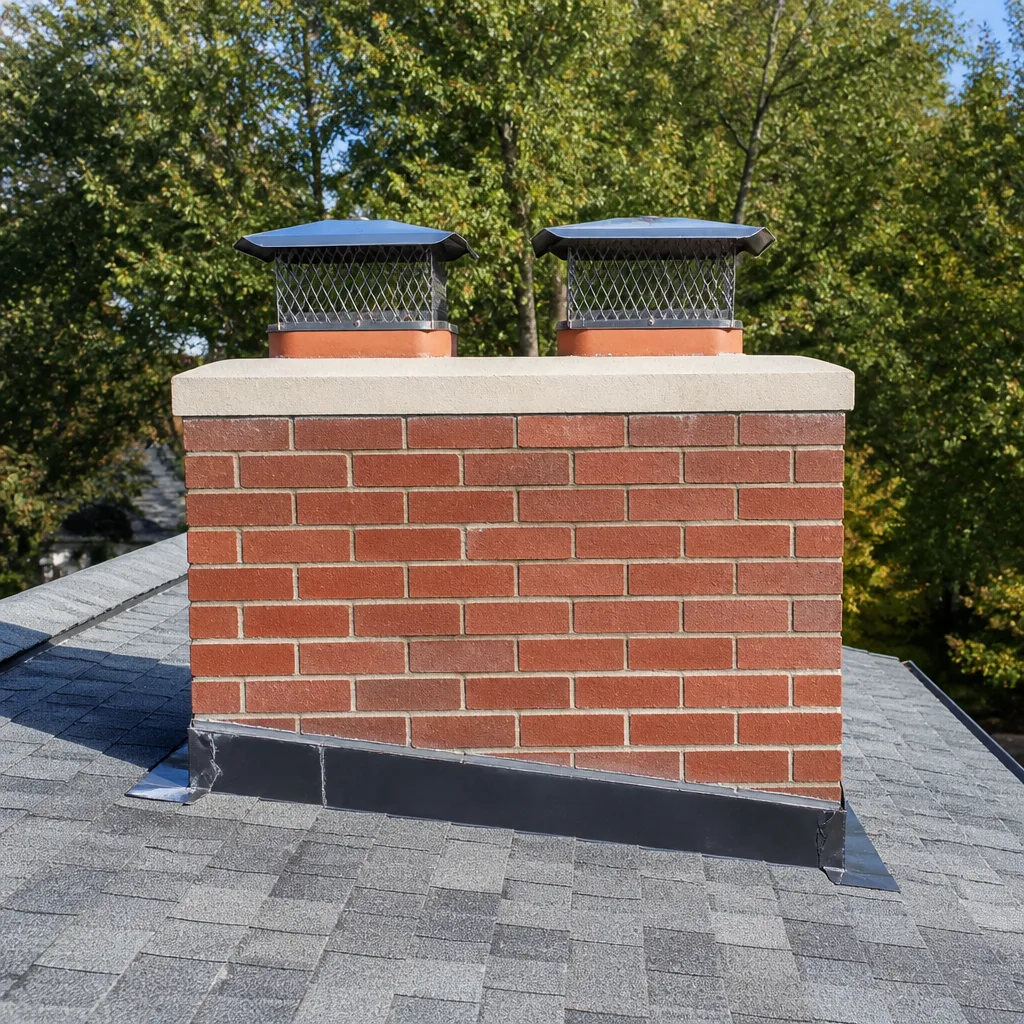
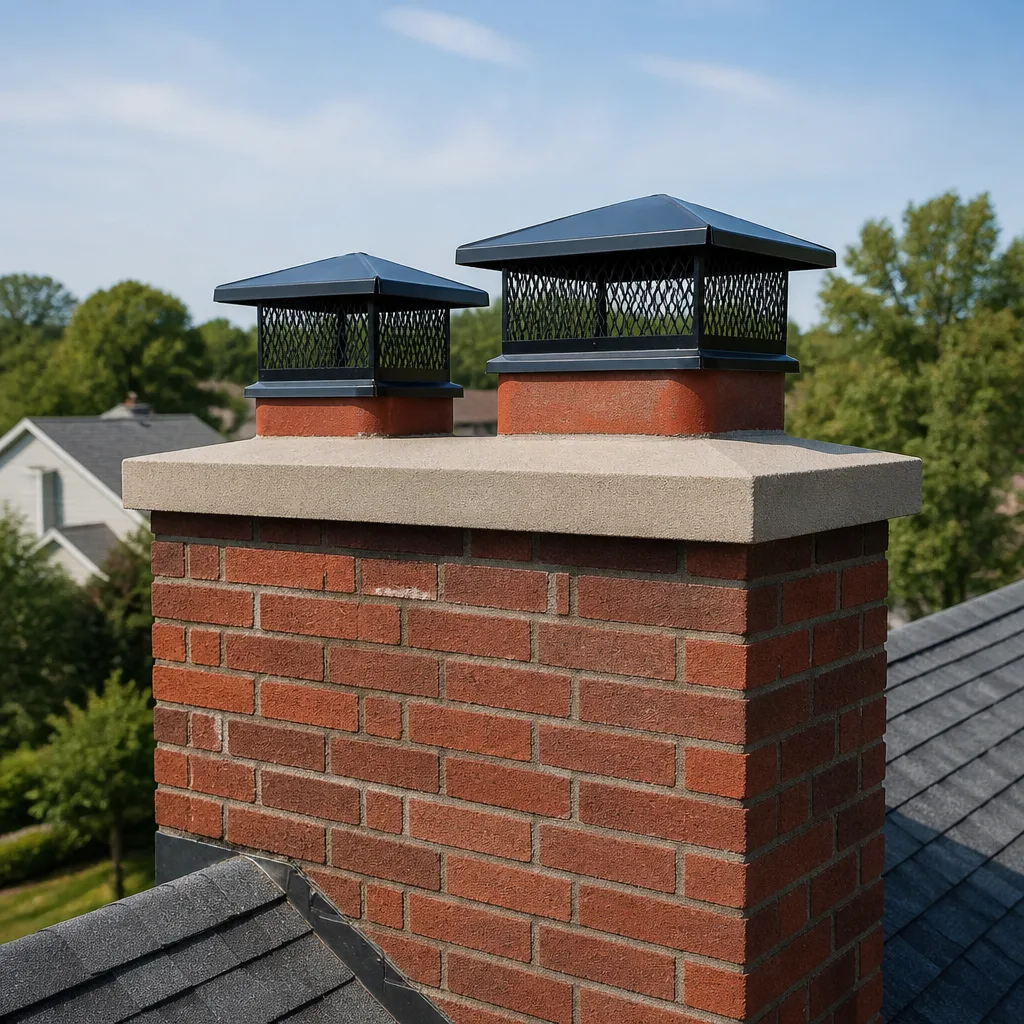 Caps & crowns
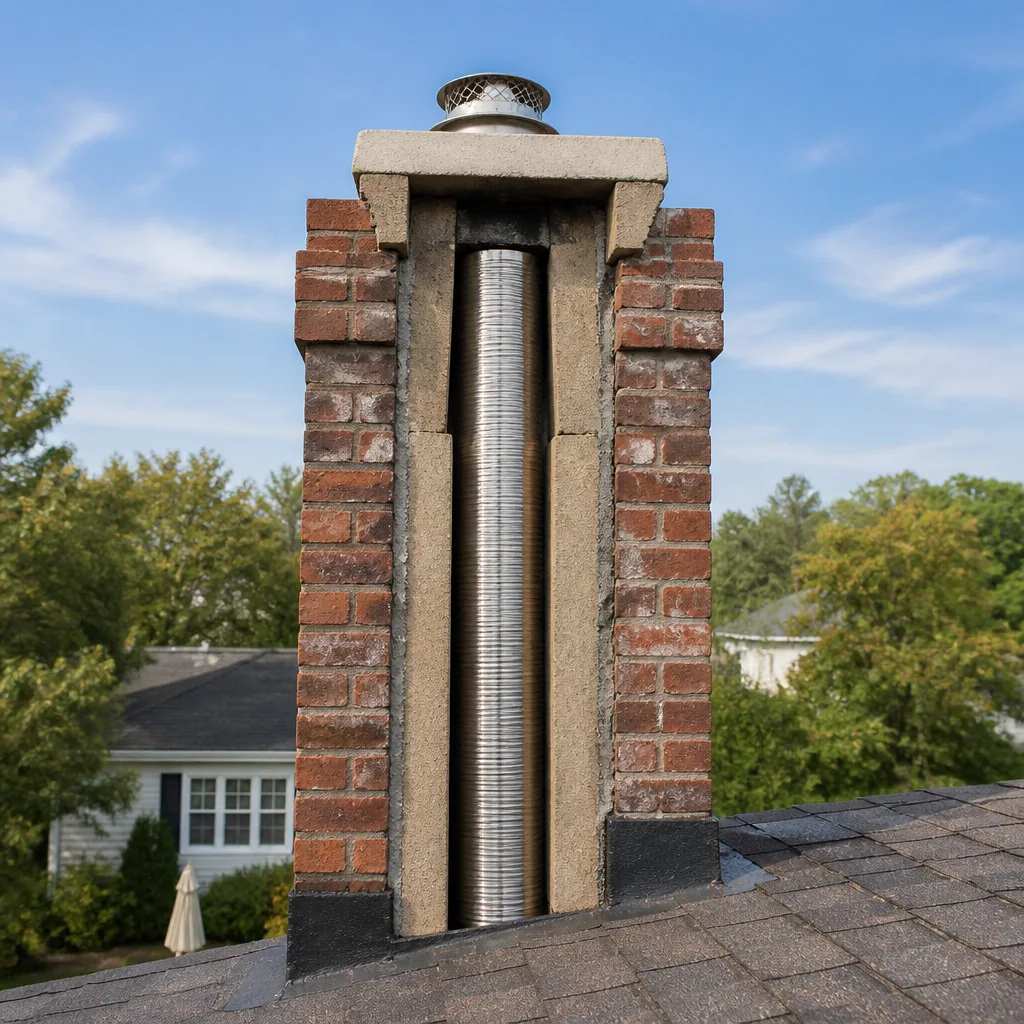 Flue relining
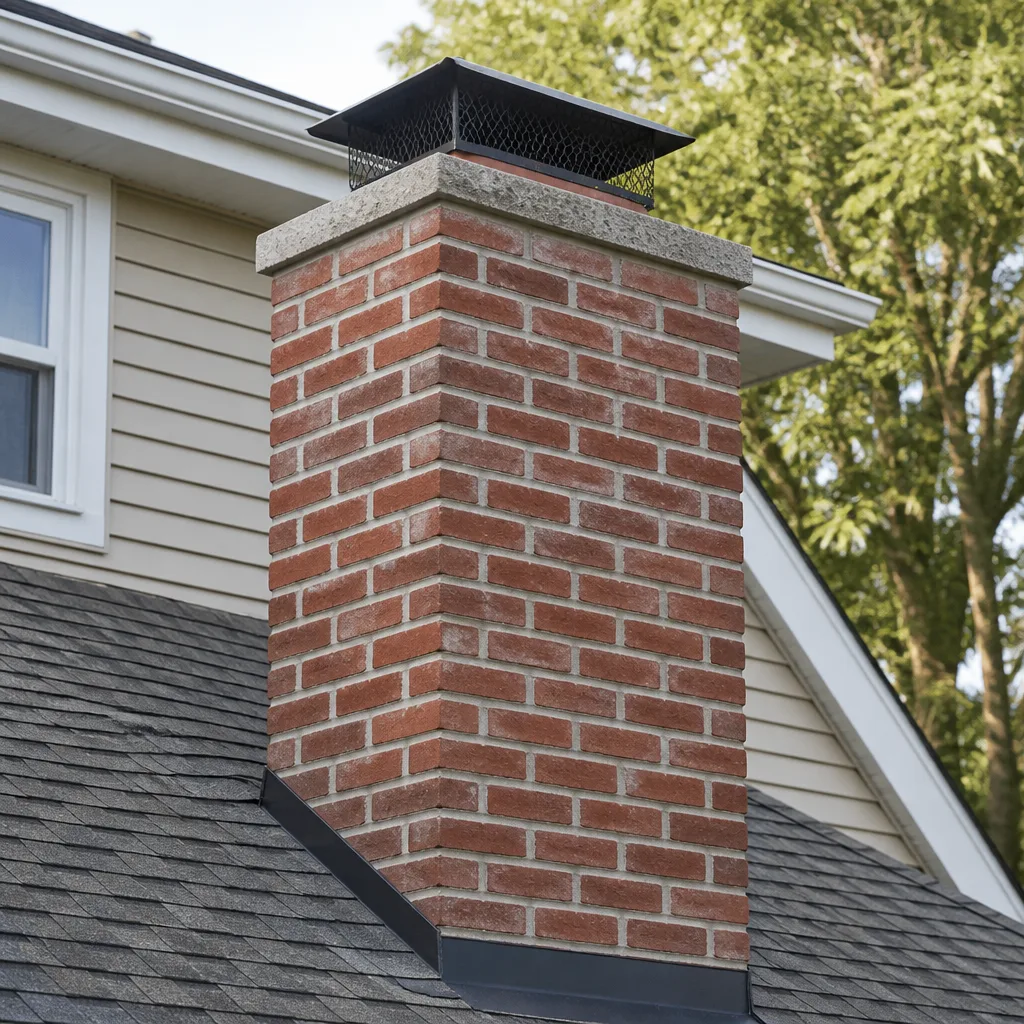 Masonry repair
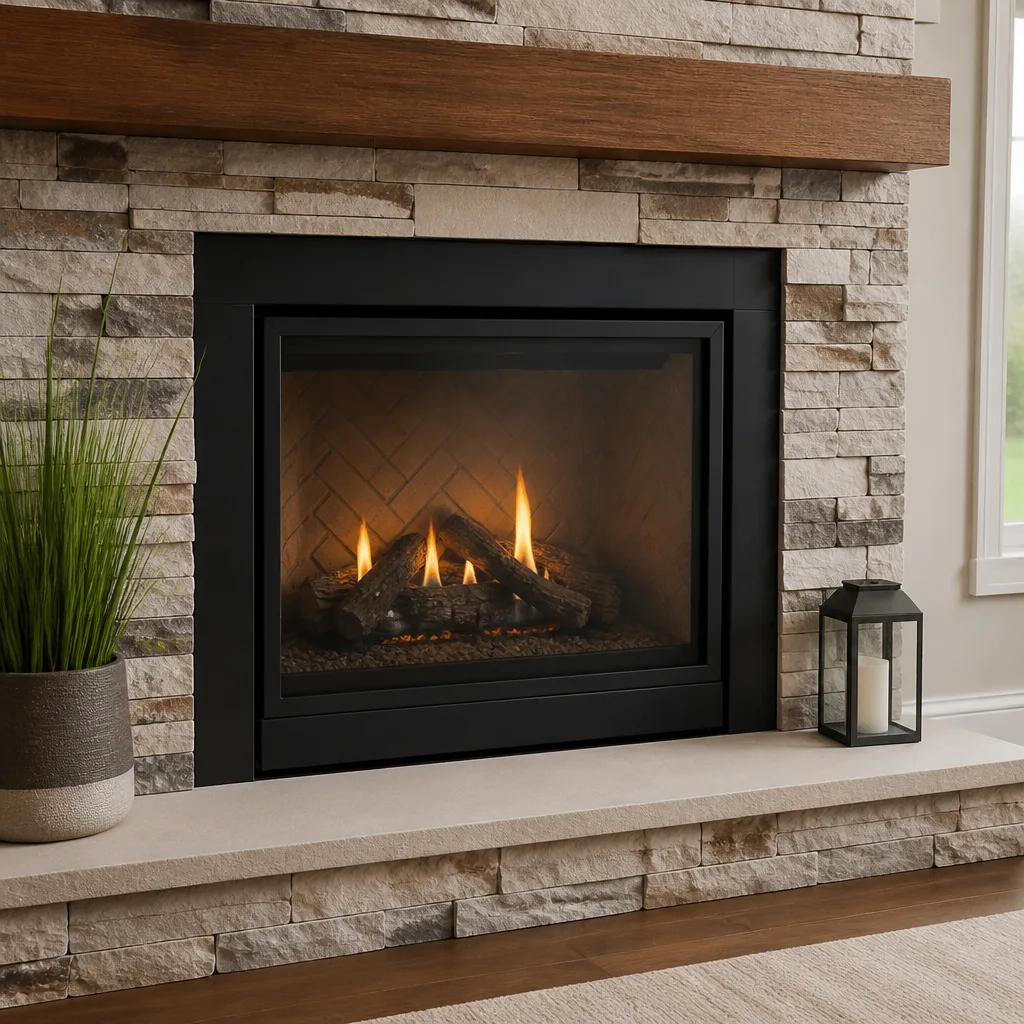 Gas fireplace service
Level 1 sweep and inspection to the NFPA 211 annual standard - flue, crown, cap, and flashing checked and photographed
Chimney sweep logs do not sweep chimneys. They loosen some creosote - which then falls where a brush and vacuum still have to collect it.
The Complete Guide to Chimney Cleaning in Northeast Raleigh
Most chimney fires in the Triangle aren’t caused by a dirty flue. They’re caused by a dirty flue that passed a visual inspection the year before. That gap is the whole reason this guide exists. A flashlight look down the flue from the firebox tells you almost nothing about what’s happening above the smoke chamber, inside the liner joints, or at the crown where water gets in. A camera scan tells you everything, and the difference between those two pictures is what a real chimney cleaning in Northeast Raleigh is built around. Below, we map the full system: how your wood-burning habits and Northeast Raleigh’s shoulder seasons shape creosote, which inspection level you actually need, why gas fireplaces still need annual attention, and what NFPA 211 has to say about all of it.
Quick Answer
Chimney cleaning in Northeast Raleigh means sweeping the flue and firebox and pairing that sweep with an inspection that matches the condition of the system, usually a Level 2 camera scan for a home that has burned for a season or more. The cleaning itself removes creosote and soot; the inspection tells you whether the clay tile liner, smoke chamber, cap, and crown are still doing their jobs. Most homes need this once a year when the fireplace sees regular use, and the written inspection findings, not a sales script, decide whether any repair is needed.
Styles & brands we work with
- Sweep & inspection
- Caps & crowns
- Flue relining
- Masonry repair
- Gas fireplace service
Table of Contents
- Why Chimney Cleaning in Northeast Raleigh Isn’t a Single Service
- How Northeast Raleigh’s Climate Shapes Creosote Buildup
- Level 1, 2, and 3 Inspections: When Each One Is Triggered
- What NFPA 211 Actually Says About Cleaning Frequency
- What a Full-System Sweep Covers That a Standard Sweep Doesn’t
- Why Gas Fireplaces in Northeast Raleigh Still Need Annual Cleaning
- Signs Your Chimney Needs Attention Now
- How to Choose a Chimney Professional in Northeast Raleigh
Why Chimney Cleaning in Northeast Raleigh Isn’t a Single Service
People search for “chimney cleaning Northeast Raleigh NC” expecting one transaction: a technician arrives, brushes the flue, leaves. That model works only if the chimney is healthy and the sweep is thorough. In practice, a cleaning is a diagnostic event. The brush pass removes what’s there; what the technician sees during that pass, and what a camera reveals afterward, determines whether the system needs more than cleaning.
Think about what a chimney actually contains. The firebox holds the fire. Above it, the smoke chamber tapers up through a corbelled throat toward the smoke shelf and the flue. The flue itself is typically lined with clay tiles, each joint a potential place for creosote to collect and moisture to enter. At the top sit the crown and the cap, the two components that keep weather out. A cleaning that touches only the flue and firebox leaves four other parts of that assembly unexamined.
That’s why we treat a sweep as the start of a conversation, not the end of one. Our process starts with understanding exactly what your chimney needs before any work is quoted.
- Sweep: removes soot, creosote, and debris from the firebox, smoke chamber, and flue.
- Inspection: documents the condition of the liner, smoke chamber, crown, cap, and any appliance connections.
- Fireplace repair: addresses the firebox, damper, and masonry that surround the fire.
- Chimney repair: handles the flue liner, masonry, and structural components above the firebox.
- Cap and crown: protects the top of the system from the single most common source of damage, water.
From the firebox to the cap, we service the entire chimney system in one visit. That matters in Northeast Raleigh because a homeowner who has to coordinate a sweep with one company, a liner repair with another, and a cap installation with a third is far more likely to let a small problem sit until it becomes a large one. A single point of contact from inspection through repair and protection removes that friction.
How Northeast Raleigh’s Climate Shapes Creosote Buildup
Northeast Raleigh sits in a climate that burns differently than New England or the upper Midwest, and that difference changes creosote behavior. Winters here are mild enough that many households use the fireplace intermittently rather than as a primary heat source. A fire on a cool evening in November, another in January, then nothing until March. Those starts and stops, more than constant burning, are what produce the conditions creosote forms in.
Creosote progresses through three stages, and the stage determines how hard it is to remove:
- Stage 1, soot and light flaky deposits. Fresh, thin, and easily brushed. Standard sweeping removes it.
- Stage 2, hardened crust. Denser and more baked-on. It brushes out with more effort and sometimes a chemical sweep aid.
- Stage 3, glazed creosote. A shiny, tar-like layer that has fused to the flue surface. Brushing alone won’t remove it, and this is the stage most associated with chimney fires.
Why does Northeast Raleigh see Stage 3 more often than its moderate climate would suggest? Two reasons. First, the shoulder seasons. A cool evening in October or March invites a low, smoldering fire with a damper barely open, and smoldering produces far more creosote than a hot, efficient burn. Second, the soil here is clay-heavy, which is relevant above the firebox rather than inside it: clay-heavy ground holds moisture, and moisture migrating into masonry from the base up compounds the damage that water intrusion from the top down starts. A chimney that stays damp between fires gives creosote a surface to bond to and gives the liner a reason to crack.
The practical takeaway: don’t measure your burning by volume. A homeowner in Northeast Raleigh who lights twenty small, smoky fires over a winter can accumulate more problematic creosote than one who lights ten hot, well-drafted ones. That’s why we ask how you burn, not just how often, before we schedule a chimney sweep. The answers change what we bring and what we look for.
Level 1, 2, and 3 Inspections: When Each One Is Triggered
Most chimney guides mention Level 1 and Level 2 inspections and skip Level 3 entirely, which leaves homeowners without a clear picture of when the deepest evaluation is warranted. Here’s the full ladder, and what triggers each rung.
Level 1 Inspection
A visual check of the readily accessible portions of the system with the same tools you have on hand, plus a flashlight. It covers the firebox, damper, smoke chamber as visible, and the flue as far as the eye can see. It’s appropriate when the system is unchanged since the last inspection, you’re continuing the same fuel type, and there’s no known problem. Annual maintenance on a healthy chimney falls here, though a camera scan adds a lot for modest cost.
Level 2 Inspection
A camera scan of the flue interior, plus a close look at accessible attic and rooftop components. This is the level triggered by a change in the system or its circumstances:
- A change in fuel type, such as switching from wood to gas logs or pellets.
- A change in appliance, including a new insert or a replaced fireplace.
- A property sale or transfer of ownership.
- An event: a chimney fire, a flue collapse, a seismic event, or a severe storm.
- Any sign of a problem that a visual check can’t explain, such as a lingering odor or smoke backdraft.
For a Northeast Raleigh home that has burned for a season or more and hasn’t had a camera scan, Level 2 is the sensible baseline. It reveals liner joint gaps, offset sections, and Stage 3 glazing that a flashlight from below simply cannot show.
Level 3 Inspection
The deepest evaluation. A Level 3 is triggered when a Level 1 or Level 2 finds a hidden hazard or an area that can’t be assessed without access, and it may require removing parts of the chimney or building to get there. Think a suspected cracked flue behind masonry, a hidden obstruction, or damage suspected in a concealed section. Level 3 is rare, but it’s the reason a technician who stops at Level 2 and calls it done isn’t giving you the whole picture. If a problem is suspected in a concealed area, the right answer is to get access and look, not to guess.
What NFPA 211 Actually Says About Cleaning Frequency
NFPA 211, the Standard for Chimneys, Fireplaces, Vents and Solid Fuel-Burning Appliances, is the document that governs how often chimneys should be cleaned and inspected. The practical reading is straightforward: chimneys, fireplaces, and vents shall be inspected at least once a year, and cleaned as often as necessary to keep them free of creosote and obstructions.
Notice what that language does and doesn’t say. It doesn’t name a number of cords or a number of months. It ties cleaning to condition. That’s why a once-a-year inspection is the anchor, and the cleaning schedule flexes around what the inspection finds. A household burning a couple of cords of seasoned hardwood in a well-drafted fireplace may need only an annual sweep. A household burning green or unseasoned wood in a smoldering, damper-restricted fire may need sweeping twice a season.
The standard applies to gas appliances too. NFPA 211 covers vented gas fireplaces and appliances, and the annual inspection requirement doesn’t hinge on what fuel you burn. If a flue is connected to a vented appliance, it gets inspected, and it gets cleaned when the inspection says so. In Northeast Raleigh, where gas fireplaces are common in newer construction and wood-burning fireplaces are common in older homes, the same standard applies to both, even though what you find inside looks very different.
Two more things worth knowing from the standard’s approach. First, a chimney should not be cleaned on the assumption that cleaning will fix a defect; cleaning and inspection are paired, and defects are addressed separately. Second, the standard’s inspection levels, which we covered above, come from this framework, not from any particular company’s preference. If you want the full scope of what we do under the chimney repair umbrella, that’s covered on our repair pages, and a camera scan is the starting point for all of it.
What a Full-System Sweep Covers That a Standard Sweep Doesn’t
A standard sweep brushes the flue and vacuums the firebox. A full-system sweep does that plus the parts that hide problems. The difference is not marketing; it’s the places creosote and damage actually accumulate. Here’s what a complete visit looks like, step by step:
- Set up containment. Drop cloths and a HEPA vacuum keep soot out of the room. This is the part you notice least and appreciate most.
- Sweep the flue. The brush and rods clear soot and creosote from the firebox up through the flue, sized to the flue’s actual dimensions.
- Clean the smoke shelf and smoke chamber. The shelf catches debris and the chamber’s corbelled walls collect creosote that a flue-only brush pass leaves behind. This is where a lot of “swept but still smoky” complaints originate.
- Scan the liner with a camera. We look for joint gaps, cracked tiles, offset sections, and glazed creosote the brush couldn’t touch.
- Inspect the cap and crown. The crown sheds water off the top of the chimney, and the cap keeps rain, birds, and debris out of the flue. Both are checked for cracks, spalling, and missing screens.
- Document the findings. You get a clear picture of what’s healthy and what isn’t, with a photo report you can see for yourself.
Steps 3 through 5 are where a full-system sweep separates itself. The smoke chamber is the classic blind spot, and cap and crown failures are the leading cause of chimney water damage. We install components from manufacturers like Gelco and Famco for that reason: purpose-built caps and crowns do the job better than improvised covers because they’re engineered for the load and the weather. When the liner itself is deteriorated but not beyond saving, we use HeatShield, a restoration system that resurfaced flue interiors without full liner replacement. That’s a repair option many sweep-only operators simply can’t perform, and it can extend the life of a damaged flue without the cost of full relining. Our chimney cap & crown work is usually the smallest line on the invoice and the one that prevents the largest future repair.
Why Gas Fireplaces in Northeast Raleigh Still Need Annual Cleaning
A gas fireplace produces no visible creosote, so it’s easy to assume it needs no cleaning. That assumption is wrong, and the reasons are specific. Gas appliances vent differently, but they still have a flue, and a flue is still a hole in the top of your house.
- Moisture intrusion. Gas combustion produces water vapor. In a flue that’s cool or in a home where the fireplace runs intermittently, that vapor can condense on the flue walls and, over time, contribute to liner deterioration. A flue that’s damp is a flue that’s failing.
- Bird nesting. An uncapped flue is a nesting site. Birds, squirrels, and other animals find their way in, and a blocked flue is a carbon monoxide risk whether the appliance burns gas or wood.
- Debris and soot. Gas logs produce a light soot film, and airborne debris settles in the flue. Left alone, it becomes a draft problem over time.
- Carbon monoxide risk. A gas appliance vents carbon monoxide up the flue. Any obstruction or backdraft condition can push it into the living space. This is the most important reason to keep the vent path clear, and it’s a safety issue rather than a housekeeping one.
In Northeast Raleigh homes with newer gas fireplaces, the annual inspection is often the only chance to catch a venting problem before it becomes a repair. The NFPA 211 requirement applies to vented gas appliances, and the inspection is where a cracked tile or a displaced connector gets found. We work with contractor-grade materials from brands like Olympia Chimney and DuraFlex where venting components need replacement, the same products certified chimney professionals specify.
A gas fireplace is also one of the cases where a Level 2 inspection is triggered, since a change from wood to gas (or the reverse) is a change in fuel type. If you’ve recently made that switch, the camera scan is not optional.
Signs Your Chimney Needs Attention Now
Chimney problems rarely announce themselves. They show up as small signals, and the earlier you catch them, the cheaper and simpler the fix. Watch for these:
- Smoke coming back into the room. A sign of obstruction or a draft problem, and worth a prompt call rather than a wait-until-fall.
- A smell like creosote or smoke when there’s no fire. Smells on warm, humid days especially point to a buildup or a moisture issue.
- Dark staining around the firebox or near the damper. Creosote and soot accumulate where a sweep hasn’t reached.
- Crumbling mortar or loose bricks at the top. A cap or crown problem that’s already letting water in.
- Water in the firebox or a rusted damper. Cap and crown failure, usually.
- Glazed, shiny deposits down the flue. Stage 3 creosote, which needs professional removal.
- A damaged or missing cap. An open flue invites animals, rain, and debris.
Safety earns its place here. Creosote at Stage 3 is genuinely flammable, and a chimney fire is a danger to the structure of the house, not just the chimney. Gas appliances add carbon monoxide to the picture when venting is compromised. We don’t tell homeowners to sweep or inspect their own flues any more than we’d suggest they inspect their own gas lines. The camera work and the flue access require training, proper vacuums, and safe ladder work that isn’t worth doing yourself when the cost of a mistake is high. This is exactly the kind of hazard a trained professional should handle, and knowing when your chimney needs a professional is the whole skill.
How to Choose a Chimney Professional in Northeast Raleigh
The chimney trade has a wide range of practitioners, from sweep-only crews to full-system companies, and the difference matters when something beyond a brush pass is needed. Here’s how to tell them apart before you book:
- Ask what the inspection includes. A company that inspects with a flashlight from below is doing a Level 1 and calling it a day. Ask whether a camera scan is standard.
- Ask whether they can repair what they find. A sweep-only company can sweep, but if the liner is cracked or the crown is failing, you’ll be handed off. We handle the full lifecycle, from sweep through repair and cap installation, so there’s a single point of contact.
- Ask about their materials. Contractor-grade brands like DuraFlex, HeatShield, Gelco, Olympia Chimney, Famco, and Copperfield are the standard. A company that can’t name what it installs is telling you something.
- Ask to see the evidence. You should see the camera findings and the photo report yourself, not just hear a summary. Nothing gets recommended without evidence you can look at.
- Ask about the estimate. A written estimate should set the price before work begins, line by line. Estimates are free, and the price is set per job by the written estimate.
- Check the licensing of the local professional. The technician performing the work should be licensed and insured as required by the state, and you can ask to see it.
One more consideration: don’t pick a company because it’s the only one that answered on a slow Tuesday. Pick one whose inspection you can trust. A chimney professional who tells you the system is healthy when it is, and tells you plainly when work can safely wait, is the one worth keeping. If you’re ready to schedule a sweep and inspection as part of a single visit, you can start with a chimney sweep Northeast Raleigh appointment and see the whole system on one walkthrough. Estimates are free, and you’ll know what you’re dealing with before any work is quoted.
Common Mistakes to Avoid
- Treating a sweep as a substitute for an inspection. The brush pass clears the flue; it can’t tell you whether the liner joints are intact. A sweep without an inspection is a guess.
- Skipping the camera scan because the chimney “looked fine.” A visual check is a Level 1, and most of what matters is above the sightline. The scan is what finds the joint gap a flashlight misses.
- Assuming a gas fireplace needs no cleaning. No visible creosote doesn’t mean no moisture, no bird nesting, and no venting problem. Gas appliances still need the annual inspection NFPA 211 calls for.
- Letting a capped chimney go unchecked. A missing or damaged cap lets rain, animals, and debris in, and a cracked crown lets water into the masonry. Both are cheap to fix early and costly to fix late.
- Burning unseasoned or green wood. It produces more creosote and more moisture, and in Northeast Raleigh’s mild shoulder seasons it smolders instead of burning hot. Seasoned hardwood is worth the difference.
- Hiring a sweep-only company and then needing a second contractor. If the liner is cracked or the crown is failing, you’ll be handed off. Look for one company that can finish what it started.
- Ignoring a smoky fire or a lingering smell. A backdraft or a persistent creosote smell is an early signal, and early signals are the ones to act on.
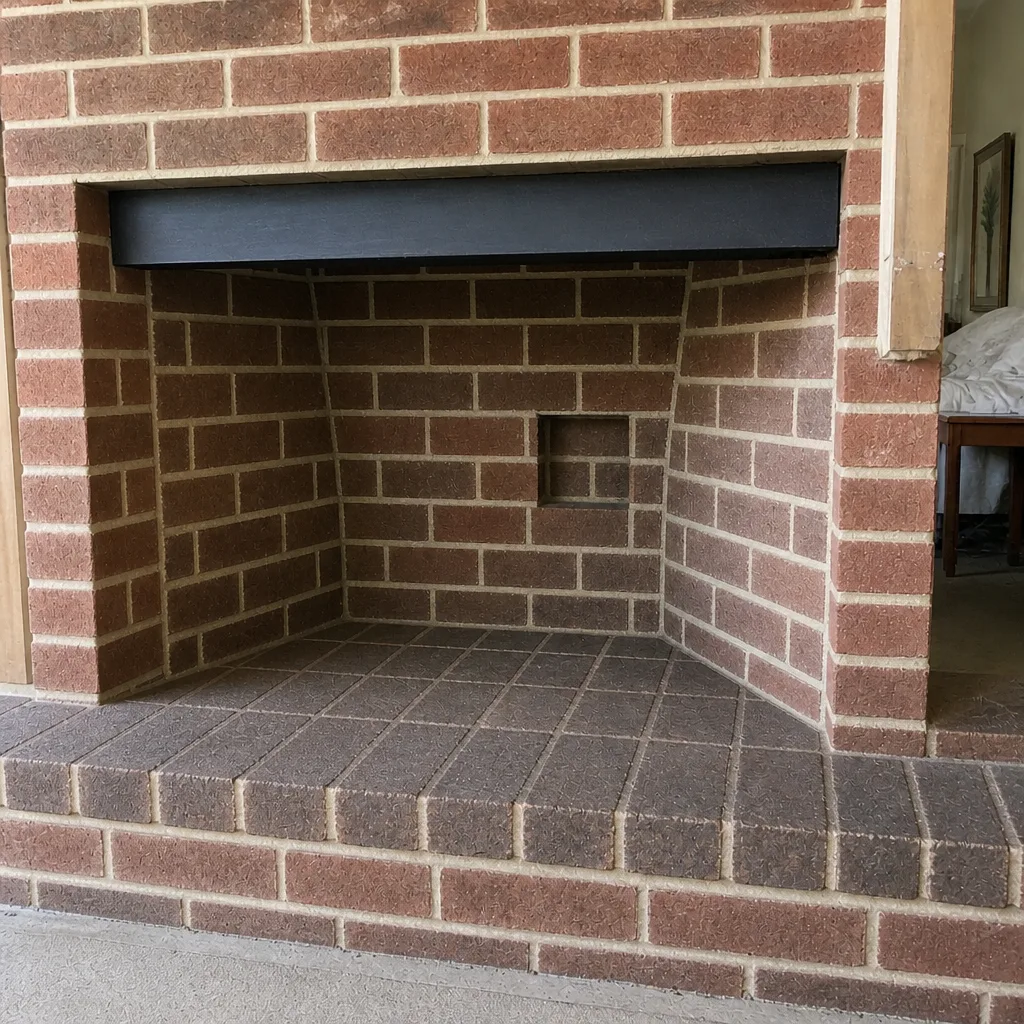
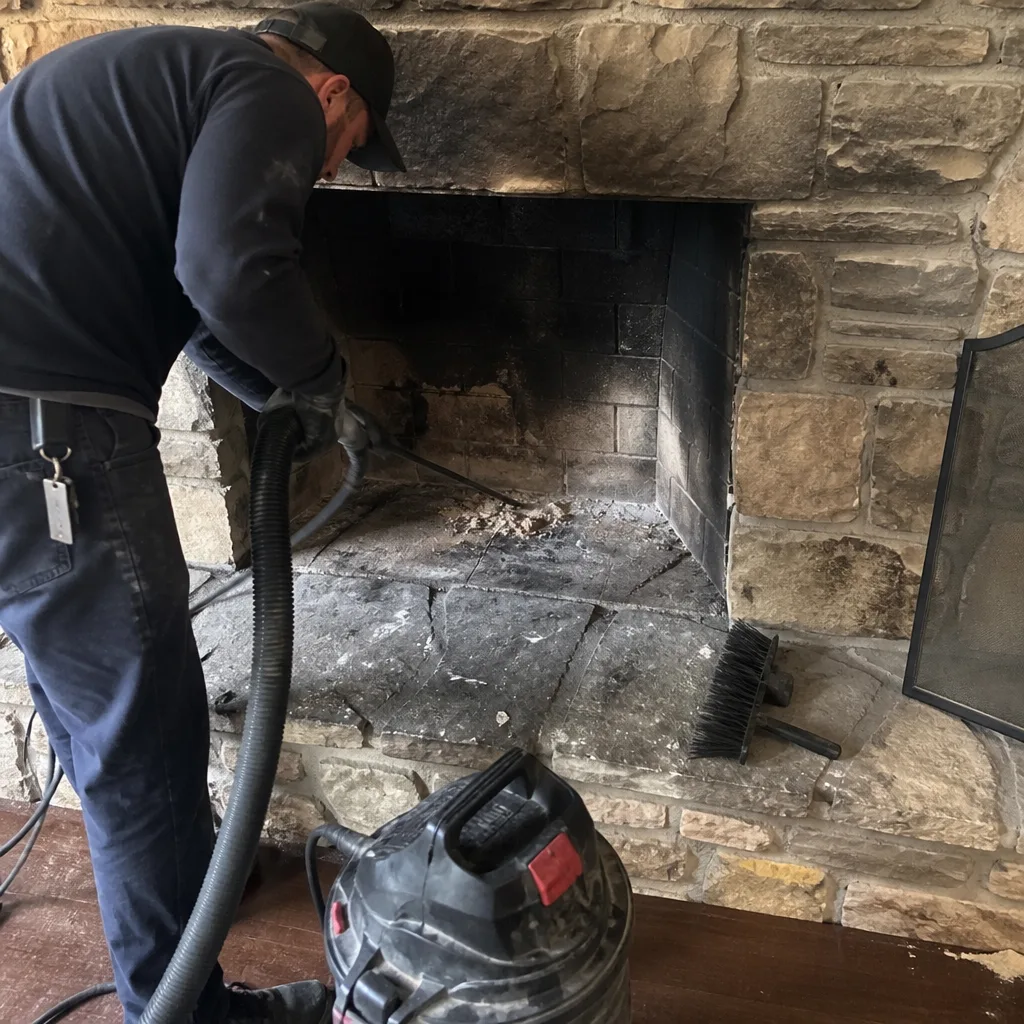
See the difference
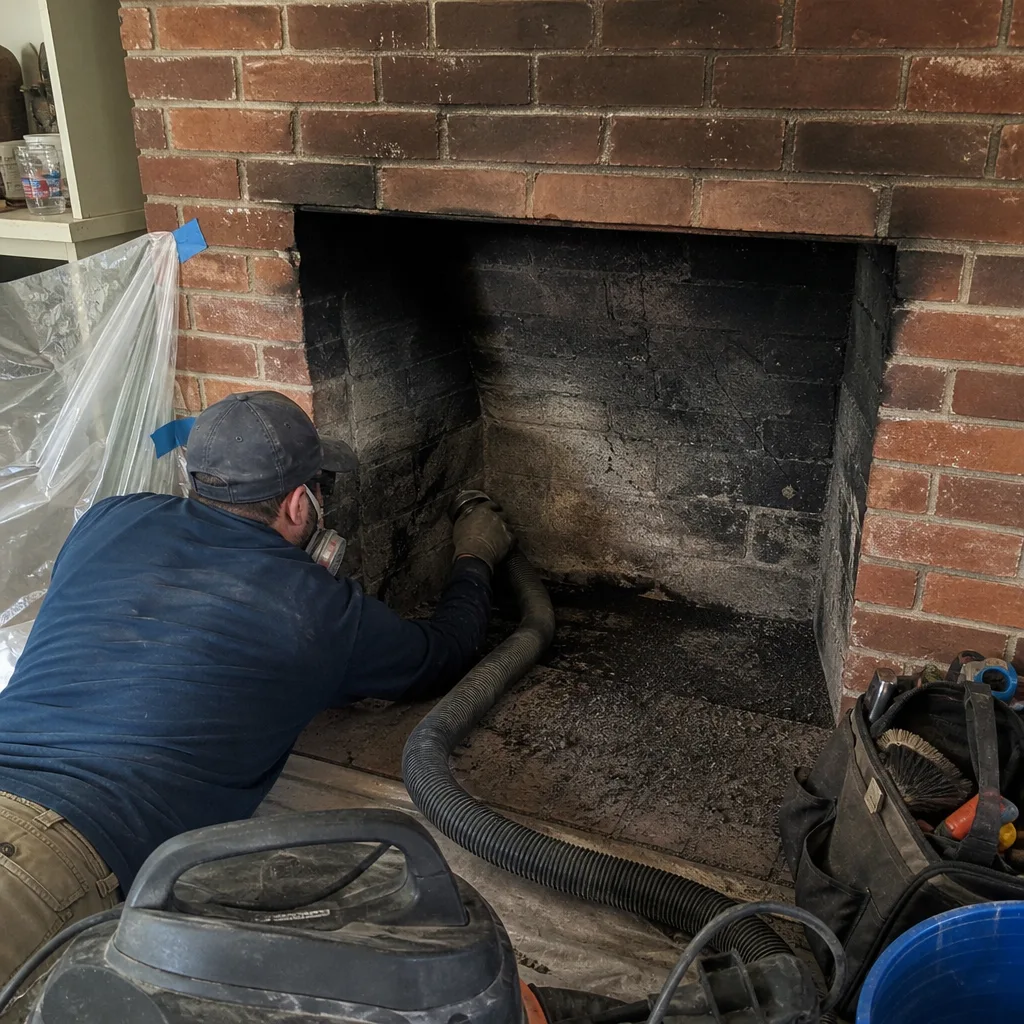 Before
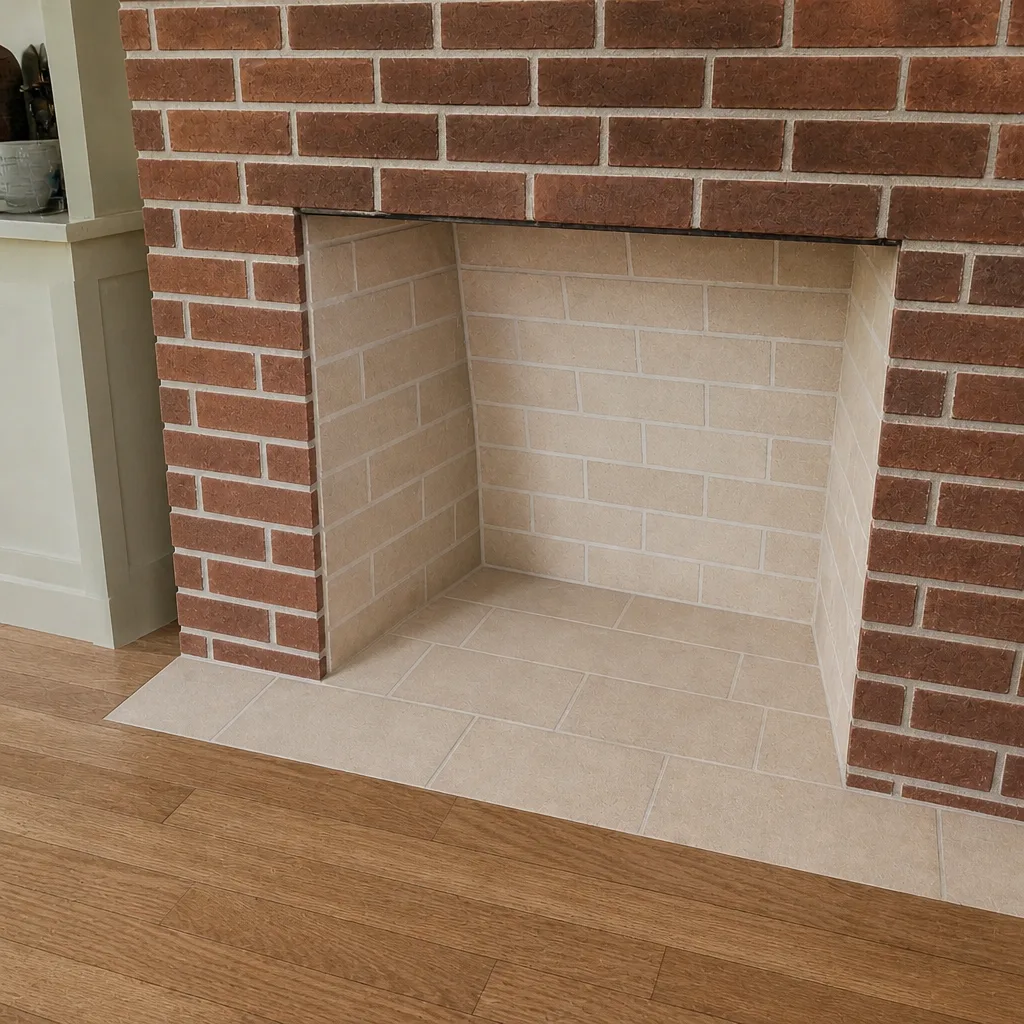 After
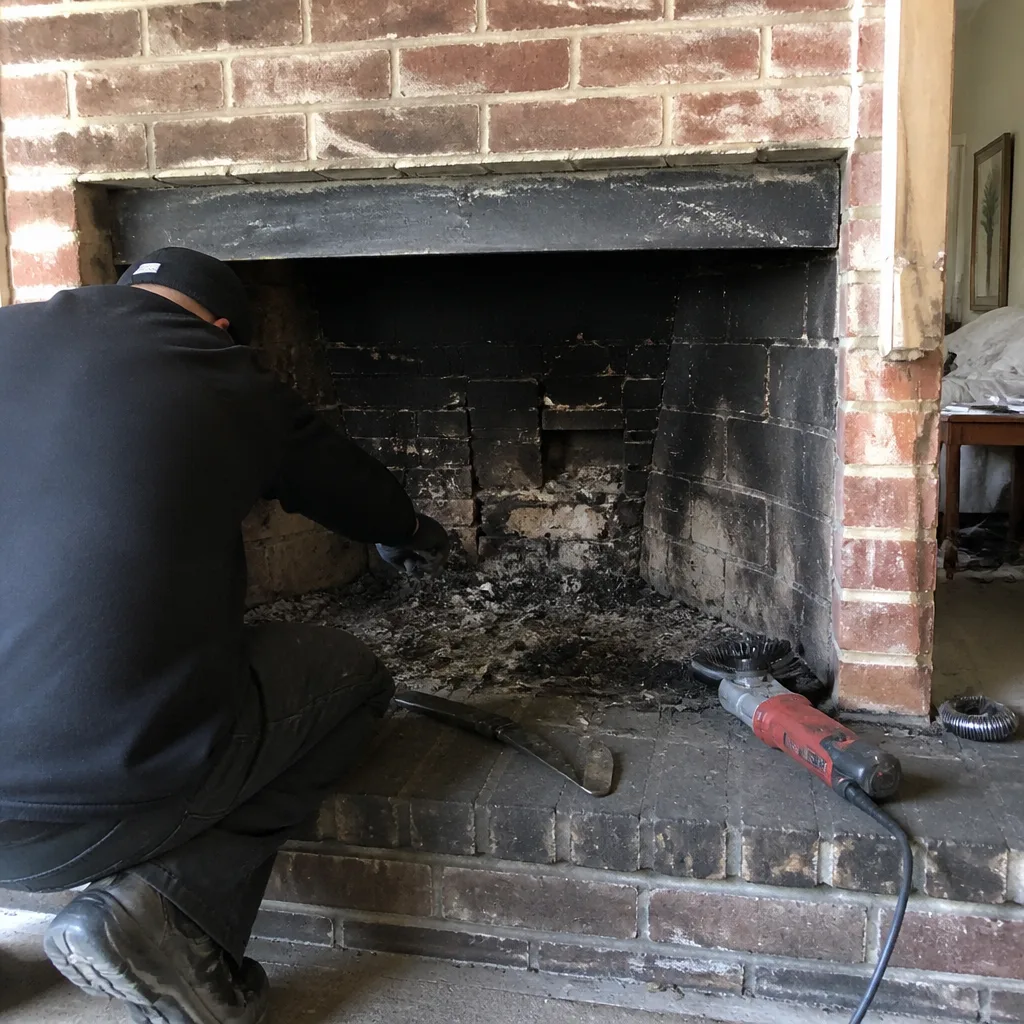 Before
 After
 Before
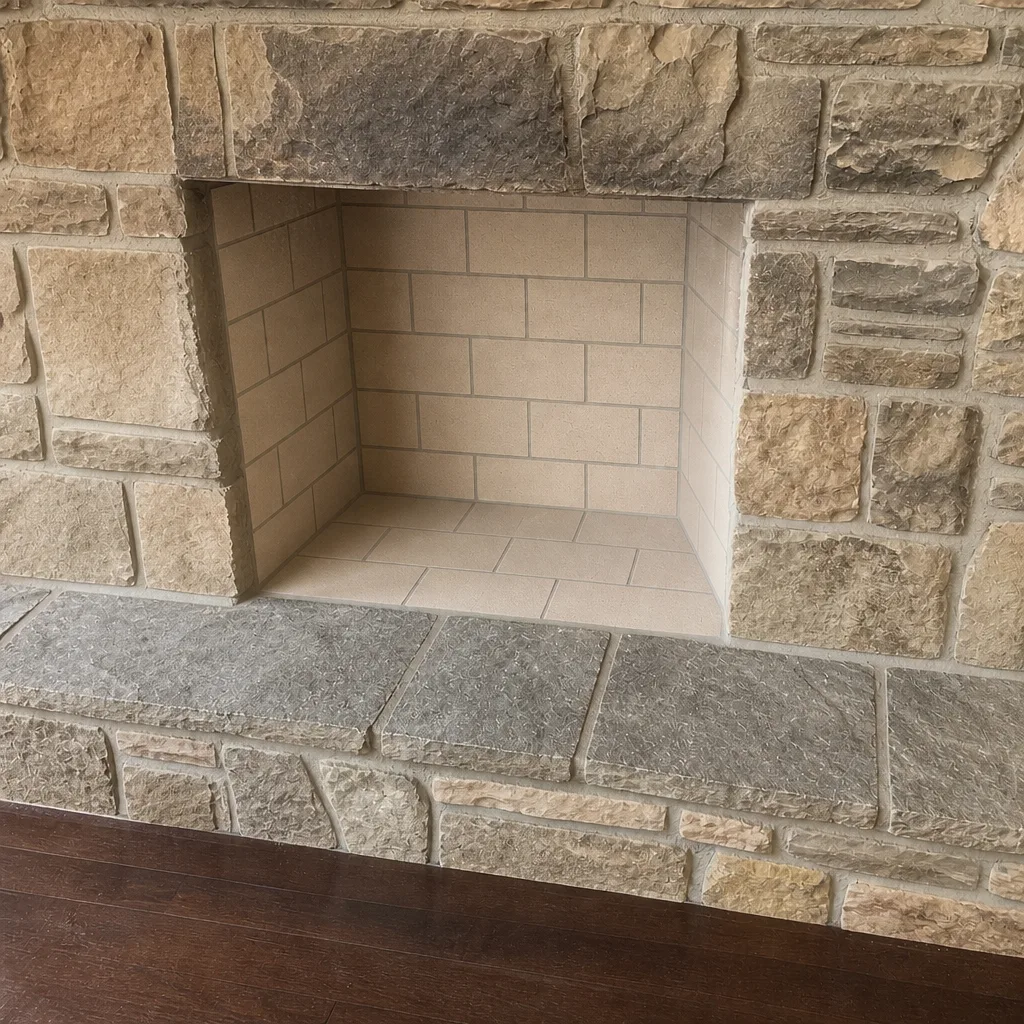 After
When to Call a Professional
Call a professional when you smell creosote in a house with no fire burning, when smoke rolls back into the room instead of going up the flue, when you see water in the firebox or rust on the damper, or when the mortar at the top of the chimney is crumbling. Call, too, when you’ve been burning regularly for a season and haven’t had an inspection, when you’ve switched appliances or fuel type, or when you’re buying a Northeast Raleigh home and want the chimney’s condition documented before closing. And call if you’ve never had the flue scanned with a camera. A chimney that has looked fine from the ground may not be, and the scan is how you find out. Chimney Sweep Northeast Raleigh offers free estimates in Northeast Raleigh, and our technicians have up to 14 years of experience. Call (855) 726-7508. We answer 24/7. Fast dispatch from 7am to 7pm, Sunday through Friday. Anything needed on a Saturday is booked for Sunday.
Frequently Asked Questions
Chimney cleaning in Northeast Raleigh is priced per job by a written estimate, so the number depends on the flue’s size, condition, and what the inspection finds. A straightforward sweep-and-inspect is one range; a flue with Stage 3 glazed creosote or liner damage that needs restoring is another. Call (855) 726-7508 for an exact quote. Estimates are free, and you’ll see the written price before any work begins.
Once a year for most homes that use the fireplace regularly, and more often if you burn green wood, burn small smoldering fires, or notice creosote buildup at the annual inspection. NFPA 211 ties the schedule to condition, not to a count of fires, so the annual inspection is what sets the actual interval. Call (855) 726-7508 to book the inspection and sweep together.
Not always. A damaged flue can sometimes be resurfaced with HeatShield, a restoration system that addresses a deteriorating liner without full replacement. The only way to know which path your chimney is on is a camera scan. Nothing is recommended without evidence you can see for yourself. Call (855) 726-7508 for a free estimate once the scan is done.
Creosote builds toward Stage 3, the glazed and highly flammable stage, and a chimney fire becomes a real possibility. Cap and crown failures let water into the masonry, which compounds over time. On a gas appliance, a blocked or compromised flue raises the carbon monoxide risk. Skipping a year is not automatically a disaster, but skipping several without an inspection is an avoidable risk. Call (855) 726-7508 for an exact quote. Estimates are free.
We can sweep and inspect in one visit and often handle the repair in the same appointment, depending on what the camera finds and whether parts are needed. Because we cover sweep, inspection, fireplace repair, chimney repair, and cap and crown work, there’s no handoff to a second contractor. Call (855) 726-7508 and we’ll schedule the right appointment.
Yes. Vented gas fireplaces still have a flue, and that flue still collects moisture, debris, and bird nesting, and still needs inspection under NFPA 211. The lack of visible creosote doesn’t remove the venting and moisture risks. If you’ve switched from wood to gas, a Level 2 camera scan is triggered. Call (855) 726-7508 for an exact quote.
The Bottom Line
Chimney cleaning in Northeast Raleigh works best when it’s treated as a diagnostic process rather than a brush pass. A full-system sweep covers the firebox, the smoke chamber, the smoke shelf, and the flue, and it’s paired with a camera inspection that tells you the condition of the liner, the cap, and the crown. NFPA 211 sets the annual inspection as the anchor, and the findings decide the cleaning interval and whether any repair is warranted. Our technicians have up to 14 years of experience, and we work with contractor-grade materials from brands like DuraFlex, HeatShield, Gelco, and Famco. If you’re ready to see exactly what your chimney needs, call (855) 726-7508. We answer 24/7. Fast dispatch from 7am to 7pm, Sunday through Friday.
Written by the team at Chimney Sweep Northeast Raleigh.